 EN
EN

What Are Semi-Metallic Brake Pads Made Of? Materials and Performance Explained
When buyers ask what are semi metallic brake pads made of, the short answer is: a blended friction material with metal content, organic binders, lubricants, abrasives, and fillers. The longer answer matters because each ingredient changes how a pad responds to heat, pressure, noise, rotor contact, and repeated braking. From a brake-material technical advisor’s perspective, the useful question is not whether semi-metallic material is universally “better.” It is whether its balance of ingredients suits the vehicle, duty cycle, and validation target.
What are semi metallic brake pads? They are pads whose friction layer typically uses a meaningful proportion of metallic constituents alongside non-metallic ingredients. Industry descriptions often place the metal share in a broad range of roughly 30% to 70%, but that is a category guide—not a formula specification. A pad with a different metal mix, resin system, or additive package can behave very differently even when both are called semi-metallic.
What are semi metallic brake pads made of?
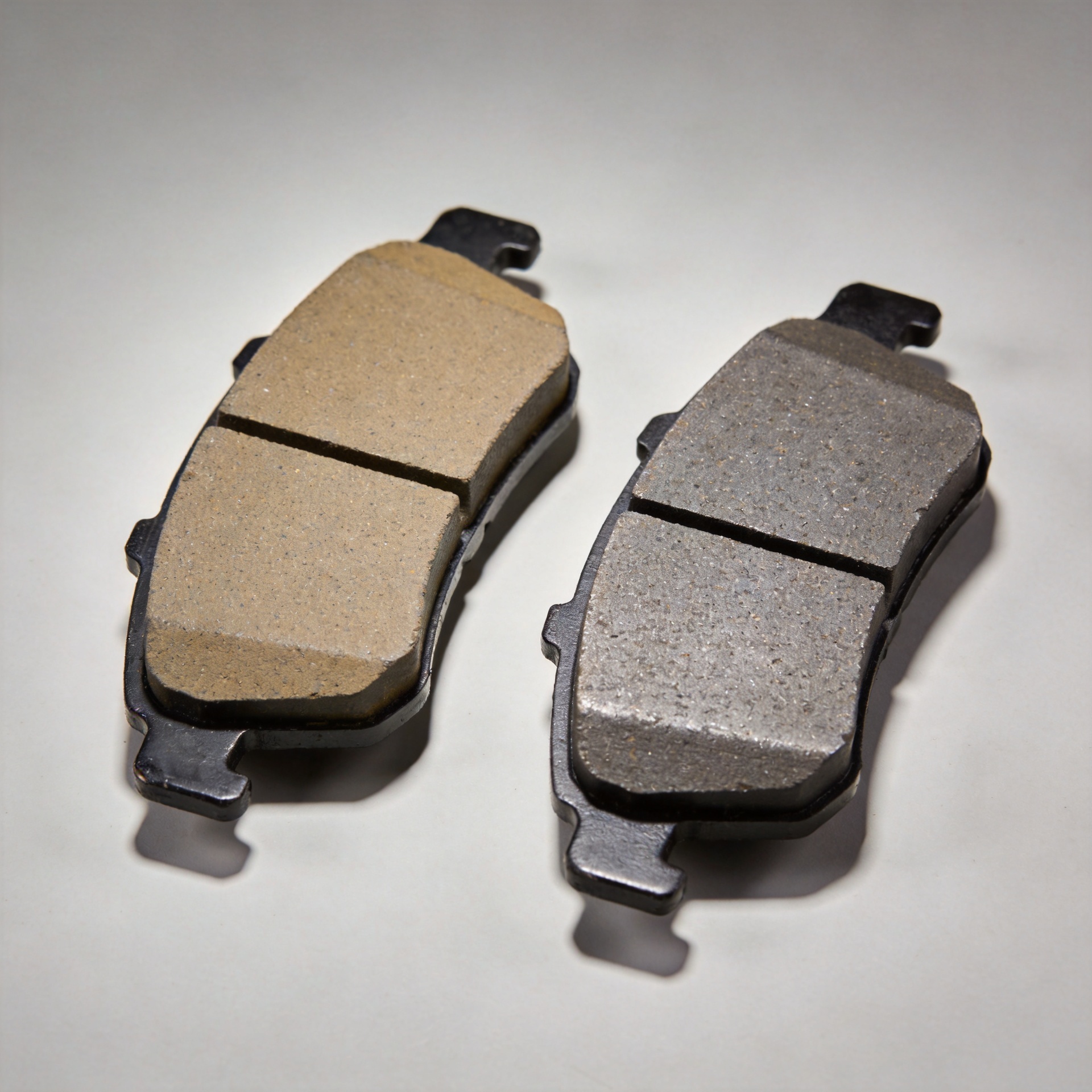
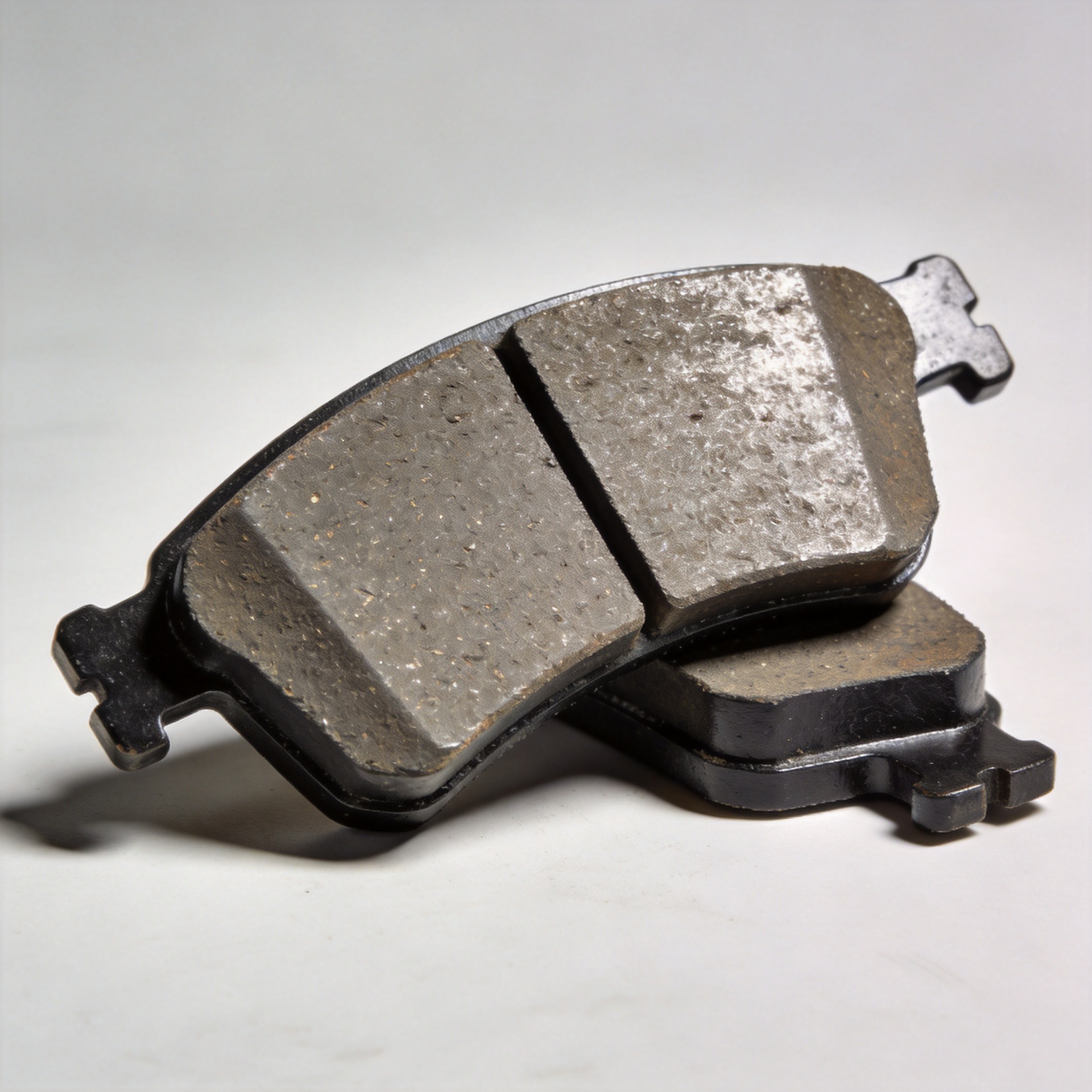
A semi-metallic friction block is a composite. Manufacturers combine several material families, then press and cure the formulation onto a backing plate. The core families are:
- Metal fibers, powders, or particles: steel, iron, copper, and alloy-based materials may be used to support heat transfer, mechanical strength, and stable friction behavior.
- Binders: resin systems hold the blended ingredients together and help the pad retain its form through normal braking heat cycles.
- Lubricants: graphite and related materials can help manage friction behavior and reduce the tendency for harsh contact under some conditions.
- Abrasives and friction modifiers: carefully selected particles help establish the bite, maintain surface renewal, and tune the friction response.
- Fillers and fibers: mineral, organic, or synthetic additions can influence compressibility, damping, cost balance, and the way the pad wears.
So, what are semi metallic brake pads made of in practical terms? Not simply “metal.” They are engineered recipes in which the metal phase works with the resin, graphite, modifiers, and fillers. Changing only one element can affect pedal feel, noise tendency, fade resistance, or rotor interaction.
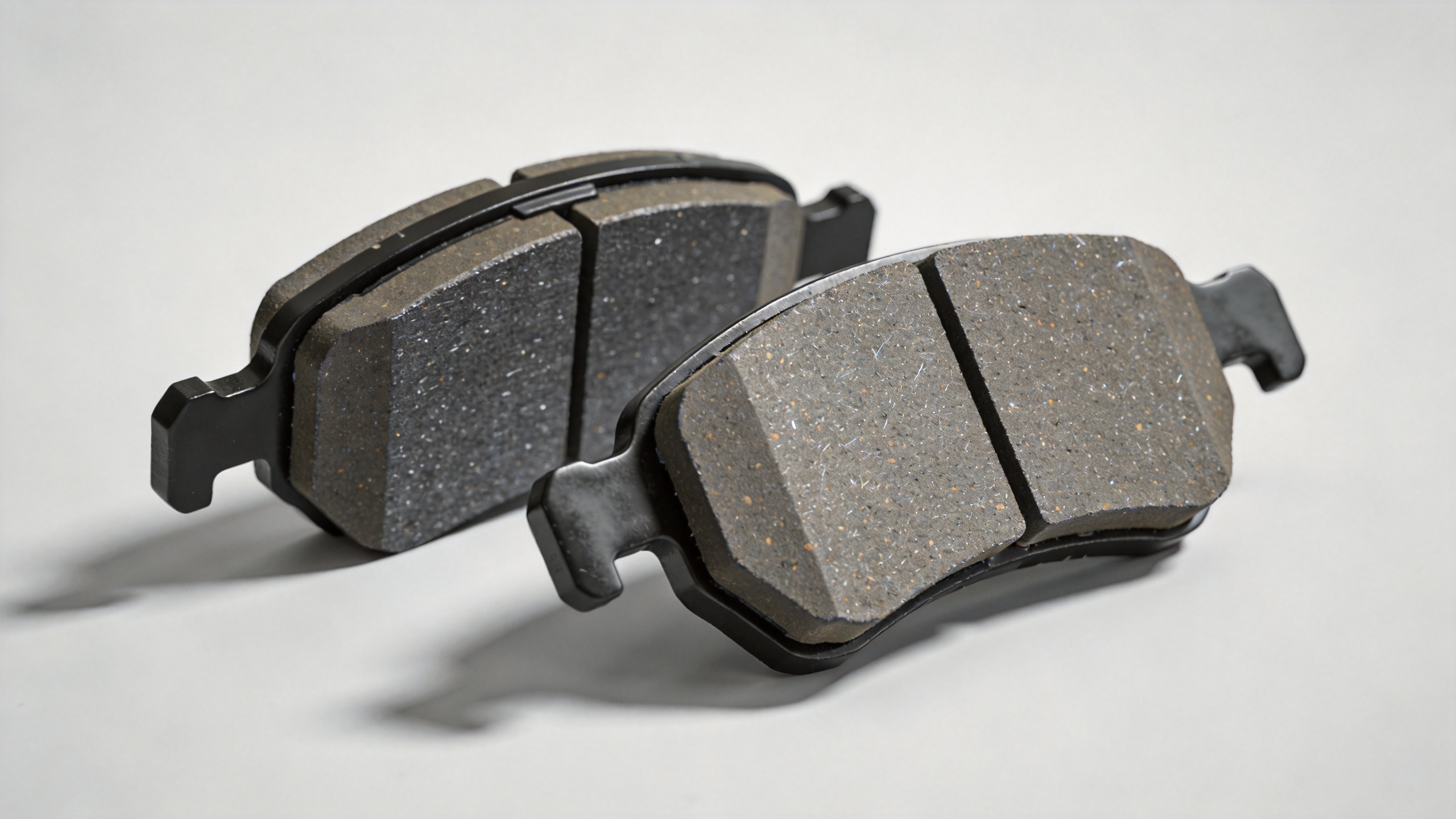
How the metal content affects braking performance
Metallic constituents are often included because they can help the friction material carry heat away from the contact area and maintain structural integrity under demanding braking. This is one reason semi-metallic pads are commonly considered for applications where repeated stops, higher vehicle mass, or elevated temperature exposure are part of the operating picture.
However, more metal is not an automatic upgrade. A formula with a higher metallic fraction may require different noise-control measures, different rotor pairing, or a different break-in approach. The friction layer must be evaluated as a system. What are semi metallic brake pads made of matters, but how the complete formulation performs on the intended caliper, rotor, and vehicle platform matters more.
The job of graphite, resin, and friction modifiers
Graphite is frequently used as a lubricant or friction modifier. It can help tune the interface between pad and rotor, especially as temperature and surface condition change. Resin binders provide cohesion, yet they also need to be chosen for the temperature range and manufacturing process. Abrasives and other modifiers then help the pad achieve the target friction profile without relying on a single ingredient.
This layered design explains why two semi-metallic pads can feel different. One may prioritize initial response; another may place more emphasis on stable behavior during repeated stops. Noise, dust, and wear are also formulation outcomes rather than labels attached to a material category.
Heat resistance, noise, and rotor wear: the trade-offs
| Performance area | How composition can influence it | What to verify |
|---|---|---|
| Heat handling | Metallic phases can contribute to heat transfer and pad strength. | Performance across repeated braking and temperature changes. |
| Brake response | Friction modifiers and abrasives tune initial bite and friction stability. | Target friction range and pedal-response expectations. |
| Noise and vibration | Material stiffness, damping ingredients, shims, and system matching all play a role. | NVH testing on the intended vehicle platform. |
| Rotor interaction | Abrasive content and metallic particles influence contact behavior and wear balance. | Rotor condition, compatibility, and wear evaluation. |
It is tempting to judge a pad from a label alone. Do not. A semi-metallic formula can be an appropriate option for a specific use case, but its value depends on the full brake-system match. For example, a buyer focused on heavy thermal loading may ask different questions from a buyer prioritizing quiet daily driving.
How are semi-metallic pads evaluated?
Ingredients provide a starting point, while testing provides the decision evidence. Inertia-dynamometer procedures such as SAE J2522 are designed to screen brake friction-material effectiveness under controlled changes in pressure, speed, and temperature. Such testing is useful because it evaluates behavior, not just a supplier’s ingredient list.
For procurement or private-label development, ask for the conditions behind any performance claim: the test method, rotor type, temperature stages, pressure, vehicle application, and acceptance criteria. This is a practical shift in thinking: first confirm vehicle use, braking load, fitment requirements, and validation method; then decide whether a semi-metallic formulation is a good match.
Choosing a semi-metallic formula for your application
Before selecting a formula, define the platform and target outcome. Consider vehicle weight, axle position, rotor design, expected temperature exposure, noise requirements, regional material restrictions, and the desired balance between response and comfort. If a supplier offers several friction-material options, compare their tested application data rather than assuming one category fits every program.
For buyers reviewing passenger-car brake-pad sourcing, product fitment and material discussion should be kept separate until the application is confirmed. You can review an example passenger-car brake pad product listing for fitment reference; the listing itself should not be treated as evidence of semi-metallic composition.
Key takeaway
What are semi metallic brake pads made of? They are multi-component friction materials that combine metal constituents with binders, graphite or other lubricants, abrasives, modifiers, and fillers. The resulting balance can support heat management and robust braking behavior, but it also creates trade-offs in noise, rotor interaction, and application fit. The most reliable selection method is to pair a clear material discussion with vehicle-specific testing and verification.