 EN
EN

Ceramic vs Semi-Metallic Brake Pads: A B2B Buyer’s Selection Guide
For a distributor or private-label buyer, ceramic versus semi metallic brake pads is not a simple “premium versus value” choice. The right formulation depends on the vehicle mix, operating conditions, service expectations, and the claims your sales team must support. A quiet, low-dust pad may be the better catalog fit for many passenger-car programs, while a more thermally conductive semi-metallic formulation can be a stronger match for demanding duty cycles. The purchasing decision should be made at the application level, then validated at the vehicle-system level.
This guide compares the two categories through the questions B2B buyers actually need to resolve: noise and dust expectations, heat management, wear balance, target vehicle fit, incoming inspection, and supplier communication. It is written for wholesalers and brake-pad brands building reliable passenger-car assortments across Asia, North America, and South America.
Start With the Customer’s Operating Profile, Not the Material Label
The debate around ceramic versus semi metallic brake pads often becomes misleading when the material name is treated as a performance guarantee. Friction formulations vary by application, backing plate, shim design, slot or chamfer geometry, rotor pairing, and manufacturing control. For procurement, ceramic and semi-metallic should be treated as starting categories for building a test plan—not as a shortcut around validation.
First segment the program by vehicle and usage pattern. Typical urban passenger vehicles may prioritize low perceived noise, clean wheels, and predictable everyday comfort. Vehicles exposed to frequent higher-speed braking, mountainous routes, heavier loads, or more severe duty may place more weight on thermal recovery and stable response across changing temperatures. The buyer’s job is to translate these scenarios into a written application brief before requesting samples.
Noise and Dust: Where Ceramic Formulas Often Fit Well
When buyers ask, are ceramic brake pads better than semi metallic, the useful purchasing answer is: better for which expectation? Ceramic-type formulations are commonly selected when low noise and lower visible dust are important commercial requirements. That can make them attractive for passenger-car replacement programs where driver comfort and wheel appearance influence repeat sales.
These advantages should be specified as testable objectives rather than blanket promises. Request the supplier’s noise-control approach, including shim configuration, chamfer or slot design where applicable, and the test conditions used to assess squeal. Also clarify how dust is being described: visible wheel dust, pad wear debris, or a comparison under a particular driving cycle are not interchangeable measures.
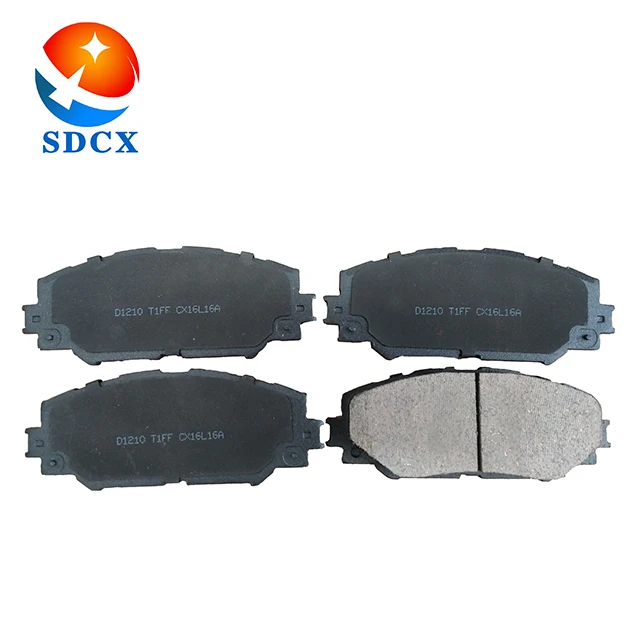
For an example of a product family that can be reviewed in this context, see the CX-D1210 no noise premium ceramic brake pad for TOYOTA. The product link identifies a ceramic-pad option; buyers should still confirm fitment, test conditions, and program-specific acceptance criteria before selection.
Heat Management: Why Semi-Metallic Pads Remain Relevant
Semi-metallic formulas use a meaningful metal content and are commonly valued for heat conduction and performance over a broader range of demanding conditions. In a ceramic versus semi metallic brake pads comparison, this can make semi-metallic candidates worth evaluating for applications where repeated braking, higher mass, or harder duty cycles put thermal behavior at the center of the sourcing brief.
The trade-off is that semi-metallic designs may create more audible braking noise or visible dust than ceramic alternatives. They can also change the wear relationship between the pad and rotor. Those are not automatic disqualifiers; they are cost-of-ownership questions. A distributor serving work-oriented or demanding applications may prefer a formulation that fits the duty profile even if it requires clearer sales guidance on noise or dust expectations.
Ask suppliers to present comparative evidence from the intended application, not only generic material descriptions. Useful questions include: What is the target temperature range? What burnish process is used? How is fade and recovery evaluated? What rotor material was paired with the sample? How are pad thickness loss and rotor condition checked after the test?
Compare Total Program Cost, Not Only the Pad Purchase Price
A low unit price can be expensive if it creates returns, warranty discussions, inconsistent pedal feel, or fitment disputes. For a practical ceramic versus semi metallic brake pads sourcing decision, compare the full program cost across product performance, packaging accuracy, inventory complexity, and expected after-sales support.
| Selection factor | Ceramic candidate | Semi-metallic candidate | Buyer verification |
|---|---|---|---|
| Noise expectation | Often prioritized for quieter operation | May require more noise-control attention | Review application-specific NVH test method and acceptance limit |
| Visible dust | Often positioned for lower visible dust | Can produce more visible dust | Define the driving cycle and comparison baseline |
| Heat-focused duty | Evaluate against actual duty cycle | Often considered for strong heat-management needs | Review fade, recovery, and cooling evidence on the target vehicle |
| Wear balance | Assess pad and rotor behavior together | Assess pad and rotor behavior together | Inspect post-test pad thickness and rotor condition |
| Commercial fit | Useful for comfort-led passenger-car lines | Useful for duty-led or broad-temperature requirements | Match the claim set to the customer segment |
Vehicle-level validation matters because brake performance is a system outcome. For example, FMVSS No. 135 covers light-vehicle service-brake and associated parking-brake requirements, with test contexts that include cold effectiveness, high-speed effectiveness, hot performance, and cooling. This does not mean an individual replacement pad is “certified” by citing the standard; it means buyers should expect their validation plans to reflect the real system conditions that influence braking performance.
A Practical B2B Selection Workflow
- Define the application. Record make, model, axle position, vehicle weight range, regional usage, and whether the line is comfort-led or duty-led.
- Set prioritized outcomes. Rank noise, dust, heat tolerance, wear behavior, pedal feel, and price rather than treating every criterion as equally important.
- Request comparable samples. Use the same application and controlled test conditions when comparing ceramic and semi-metallic alternatives.
- Review evidence with the supplier. Ask for fitment control, friction-material identification, test method, lot traceability, and packaging information.
- Run incoming and field checks. Confirm dimensions, backing-plate quality, hardware, labeling, appearance, and performance feedback before scaling the program.
- Align marketing claims with proof. Avoid absolute claims such as “no noise” or “superior stopping power” unless the program has evidence for the exact scope of that claim.
How to Make the Final Recommendation
The sound answer to ceramic versus semi metallic brake pads is usually a portfolio decision, not a single winner. Ceramic candidates can be a strong fit where comfort, low noise, and lower visible dust are core buying signals. Semi-metallic candidates can be a strong fit where thermal conditions and demanding usage deserve extra weight. Both require application-specific validation, clear specifications, and disciplined supplier communication.
For brake-pad brands, wholesalers, and large distributors, build the assortment around customer usage rather than a universal material hierarchy. Document the trade-offs, test the intended fitment, and make sure the final product description says only what the evidence can support. That approach protects your catalog, gives sales teams a defensible recommendation, and helps customers choose the right brake pad for the vehicle program.