 EN

Brake Disc vs Front Brake Rotor: A Terminology Guide for International Parts Buyers
For an international buyer, front brake rotor is more than a search phrase. It is a catalog term, an RFQ term, and a fitment-control term. A shipment can be delayed when one party requests a brake disc, another quotes a rotor, and neither side has written down the axle position, OE reference, dimensions, or vehicle application. The useful starting point is simple: in a disc brake system, brake disc and brake rotor usually describe the same rotating component. That is the point at which the procurement work begins.
From a wholesale-channel buyer’s perspective, names should make communication easier, not replace verification. This guide explains how to use the terms consistently across English-language catalogs, quotations, and purchase orders—especially when sourcing a front brake rotor for different regional markets.
Brake Disc and Brake Rotor: Same Part, Different Market Language
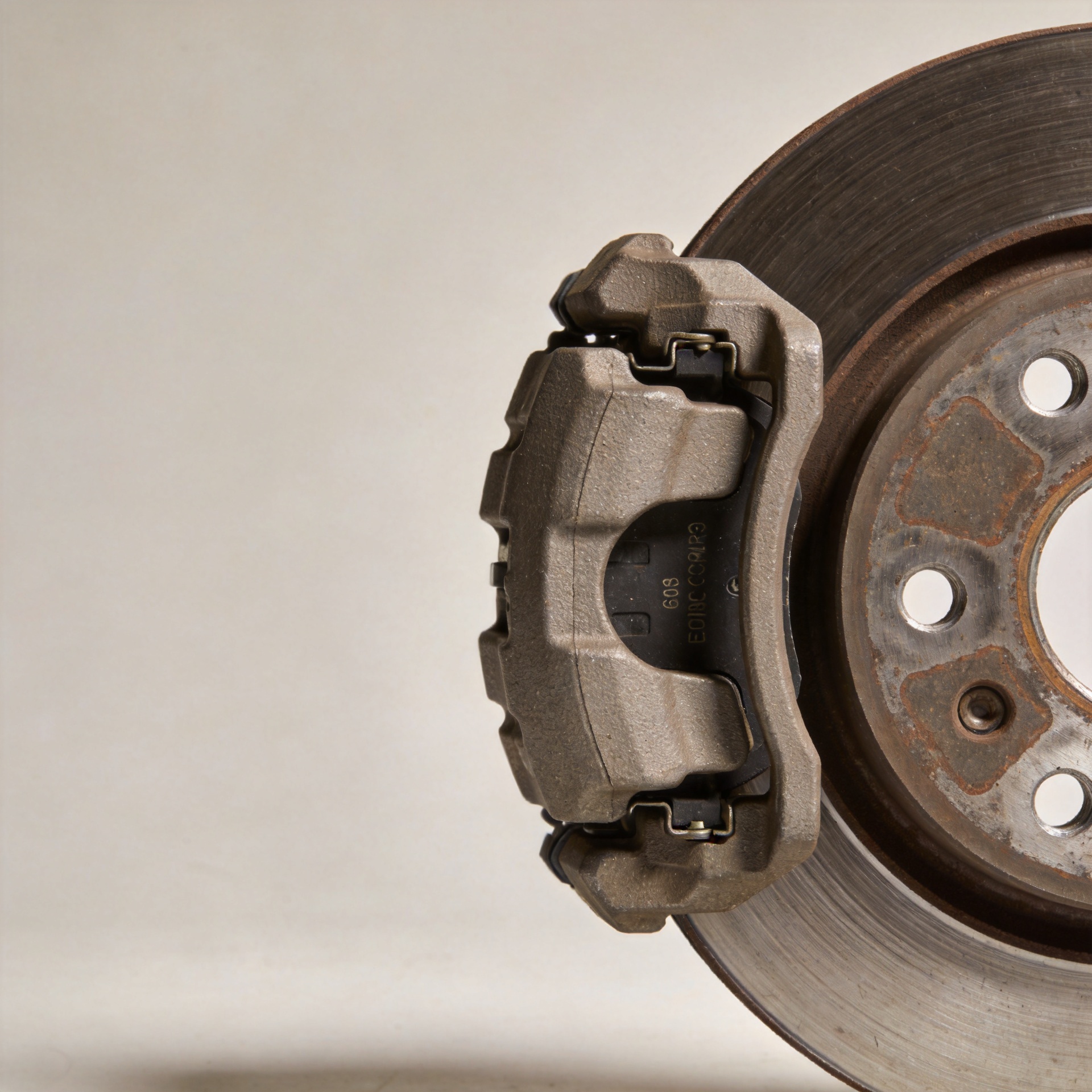
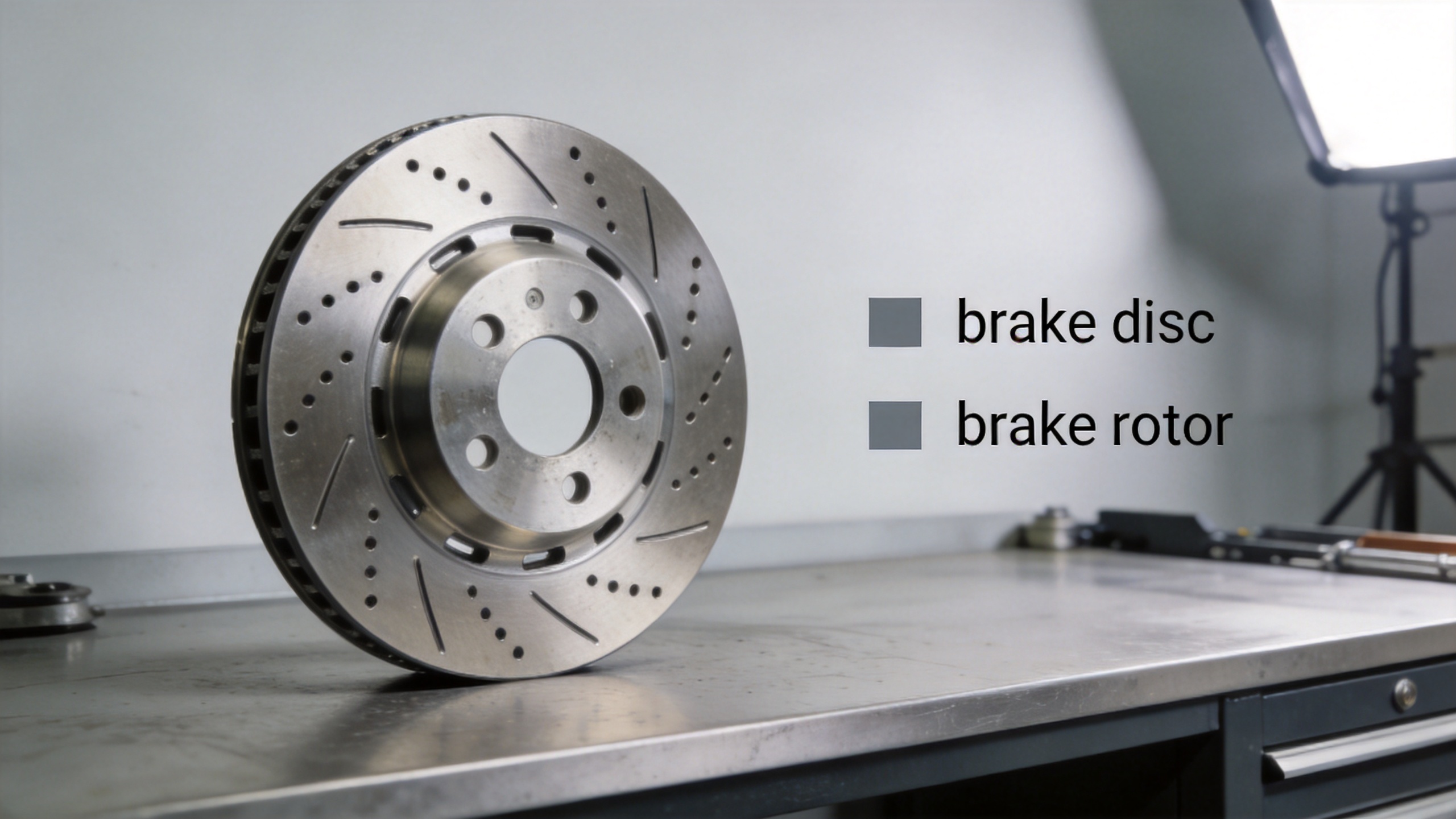
A disc brake uses pads that clamp a metal disc fixed to the wheel hub assembly. In North American aftermarket language, that disc is often called a brake rotor. In UK, European, and many export catalogs, brake disc is often the more familiar phrase. Both labels can be correct when they refer to the same disc-brake component.
That equivalence does not mean every phrase is interchangeable in every document. “Disc brake” usually names the braking system; “brake disc” names the component. “Rotor” is a component term as well, but a buyer should avoid using “disc” by itself where a catalog could also contain clutch discs or other rotating discs. For clarity, use a complete noun phrase such as front brake rotor, front brake disc, or front disc brake rotor.
| Term | Typical use | Procurement note |
|---|---|---|
| Brake rotor | Common in North American parts listings | Pair it with axle position and OE/cross-reference data. |
| Brake disc / car brake disc | Common in European and international catalogs | Useful for global catalog headings, but still needs vehicle fitment fields. |
| Front brake rotor | Component plus position | States the front axle only; it does not prove the exact application. |
| Front disc brake rotor | Expanded marketplace or search wording | Can help retrieval, but catalog masters should retain a disciplined naming pattern. |
Why “Front” Must Be Treated as a Separate Fitment Field
The word front narrows the location, not the full part identity. A front brake rotor may differ from a rear unit in outside diameter, overall height, thickness, center bore, bolt pattern, ventilation design, or parking-brake interface. Even within a single vehicle family, a brake option, engine package, or production date can change the required part.
Here is the practical rule: do not translate “front” into “correct.” In an RFQ, record it as its own controlled field: axle position: front. Then confirm the other matching fields independently. This simple recordkeeping step prevents a frequent catalog error: a supplier and buyer agree on the words front brake rotor while referring to different variants.
- OE number or approved cross reference
- Vehicle make, model, model year, engine, and brake option where applicable
- Outside diameter, nominal thickness, minimum thickness, and overall height
- Center bore, bolt-hole count/pattern, and mounting arrangement
- Solid, vented, drilled, slotted, or other design designation
- Left/right requirement only where the part design actually differentiates it
Before treating a term as a universal answer, check the drawing and application data. Vehicle condition and purchasing requirements change the decision points.
How to Write Unambiguous Catalog and RFQ Descriptions
For international catalogs, lead with the term preferred by the target market and include the alternate term once for search and buyer recognition. A controlled title can follow this pattern:
Front Brake Rotor (Brake Disc), Vented, OE Reference and Vehicle Application Confirmed
This format gives a buyer the common name, the alternate market term, the position, the design type, and a route to fitment verification. It also avoids overloading the title with claims that have not been checked. In a product information sheet, place the full technical fields in a table rather than hiding them in a long marketing sentence.
When communicating with distributors, it is helpful to use one master term per language version. For example, a North American feed may use “front brake rotor” as the primary name and list “car brake disc” as a synonym. A European-oriented feed may reverse that order. The underlying SKU, drawing revision, and application record should remain the authority—not the wording in the title.
Material Terms: Useful Context, Not a Shortcut to Approval
Many standard automotive brake rotors are discussed in relation to gray cast iron. SAE J431 is often referenced in market discussions of gray iron grades such as G3000 and G3500. For buyers, that reference can be useful context, but it is not enough to approve a front brake rotor on name alone. The applicable material grade, chemistry, mechanical requirements, coating, inspection method, and drawing revision must be confirmed against the relevant specification and supplier documentation.
The same caution applies to phrases such as “high carbon,” “coated,” or “performance.” These may describe a design or material approach, but their practical meaning changes by program. Request the specification that defines the phrase, then compare it with the required application. It is a practical procurement control rather than a sales claim.
A Simple Terminology Checklist Before You Place an Order
- Normalize the name: state “brake rotor” and “brake disc” as equivalents where appropriate.
- Lock the position: record front or rear as a controlled fitment field.
- Attach an identifier: add OE number, cross reference, drawing number, or validated SKU.
- Confirm dimensions and design: do not rely on a title containing “front disc brake rotor.”
- Align document language: use the same master description on the RFQ, quotation, PO, carton artwork, and catalog feed.
- Keep evidence with the order: retain application confirmation, drawings, and agreed inspection requirements.
This approach makes terminology a tool for faster retrieval while keeping fitment evidence where it belongs: in the technical record.
Using a Product Page Without Overstating the Match
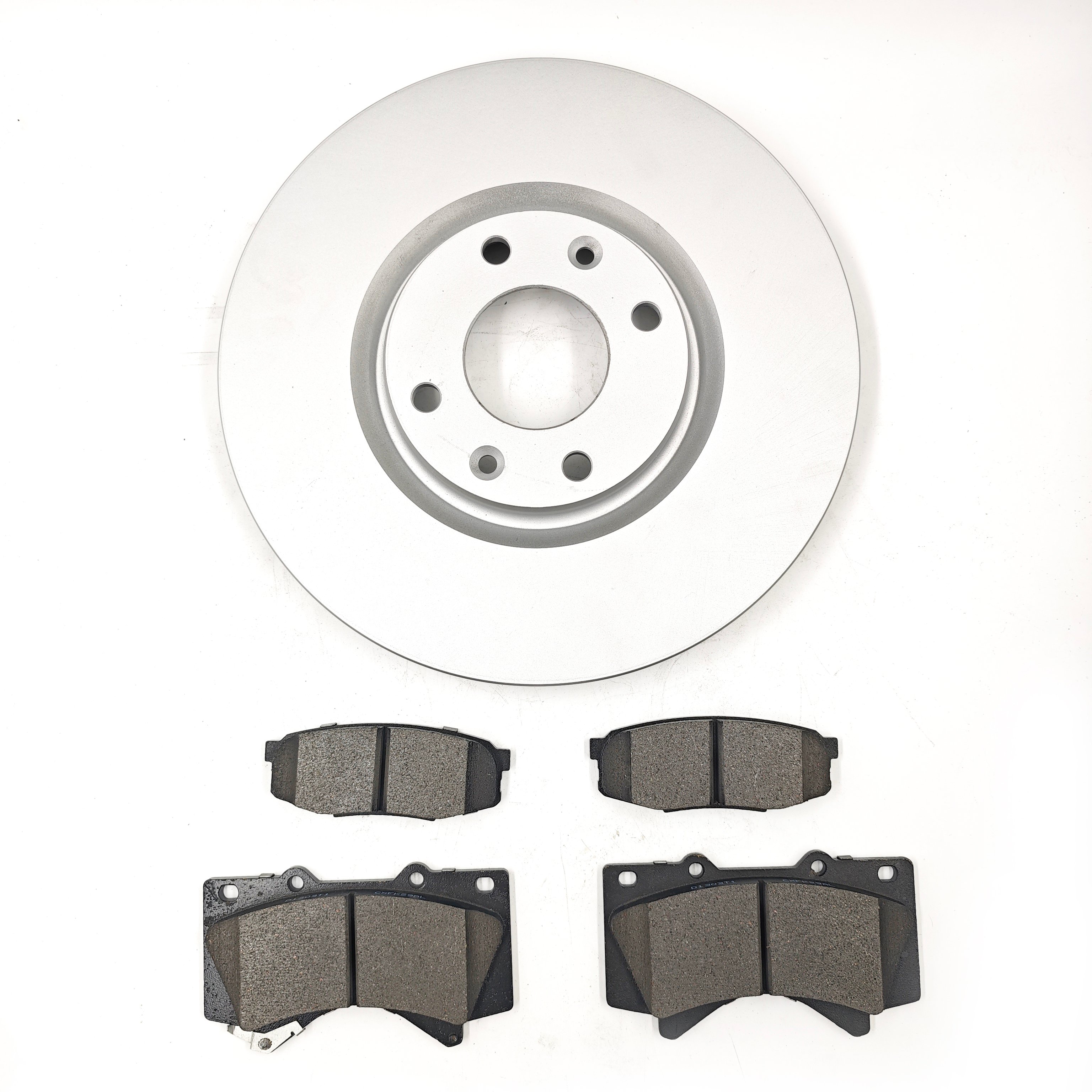
When a buyer needs an example of how a catalog title can carry multiple market terms, review the product description and application data together. For instance, the SDCX 1647867480 RN1861V Brake Disc for CITROEN OPEL Motor Factory Sell Front Brake Disc for PEUGEOT is a relevant catalog reference. Its title should still be validated against the required OE references, drawings, and vehicle application before it is used as a sourcing match.
Final Takeaway for Global Brake-Part Buyers
Brake disc and brake rotor are normally two market names for the same disc-brake component. For international sourcing, the safer habit is to acknowledge both terms, choose one controlled primary label for each catalog market, and document the alternate label for discoverability. Then move quickly to the information that actually approves a front brake rotor: position, OE reference, application, dimensions, design, and the relevant technical specification.
Clear terminology reduces needless back-and-forth. Verified fitment helps reduce returns, claims, and rework. Buyers need both.