 EN

What Are Ceramic Brake Pads Made Of?
When buyers ask what ceramic brake pads are made of, the most useful answer is that they are engineered friction composites—not solid blocks of pottery. That distinction matters when comparing ceramic brake pads vs organic brake pads for passenger-car applications. The friction layer must create predictable stopping force while controlling noise, dust, heat, and wear, so manufacturers balance several material families rather than relying on one ingredient.
For distributors and brake-pad brands, the ceramic brake pads vs organic brake pads discussion should start with formulation purpose. A pad label describes a material class and expected performance direction; it does not reveal a universal recipe. Specific ingredients, proportions, and validation methods can vary by vehicle platform, regional requirements, and supplier.
Ceramic brake pads are composite friction materials
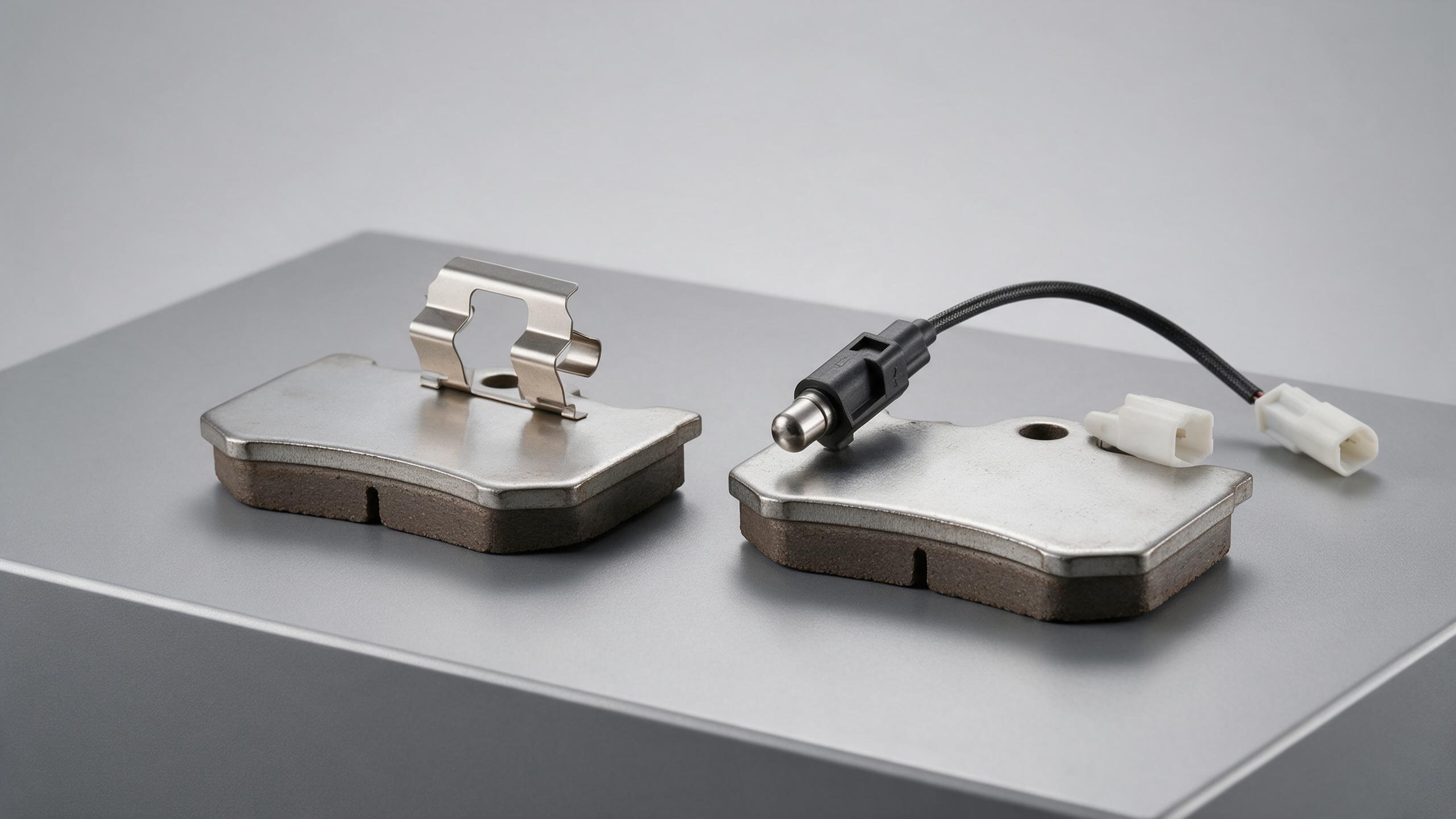
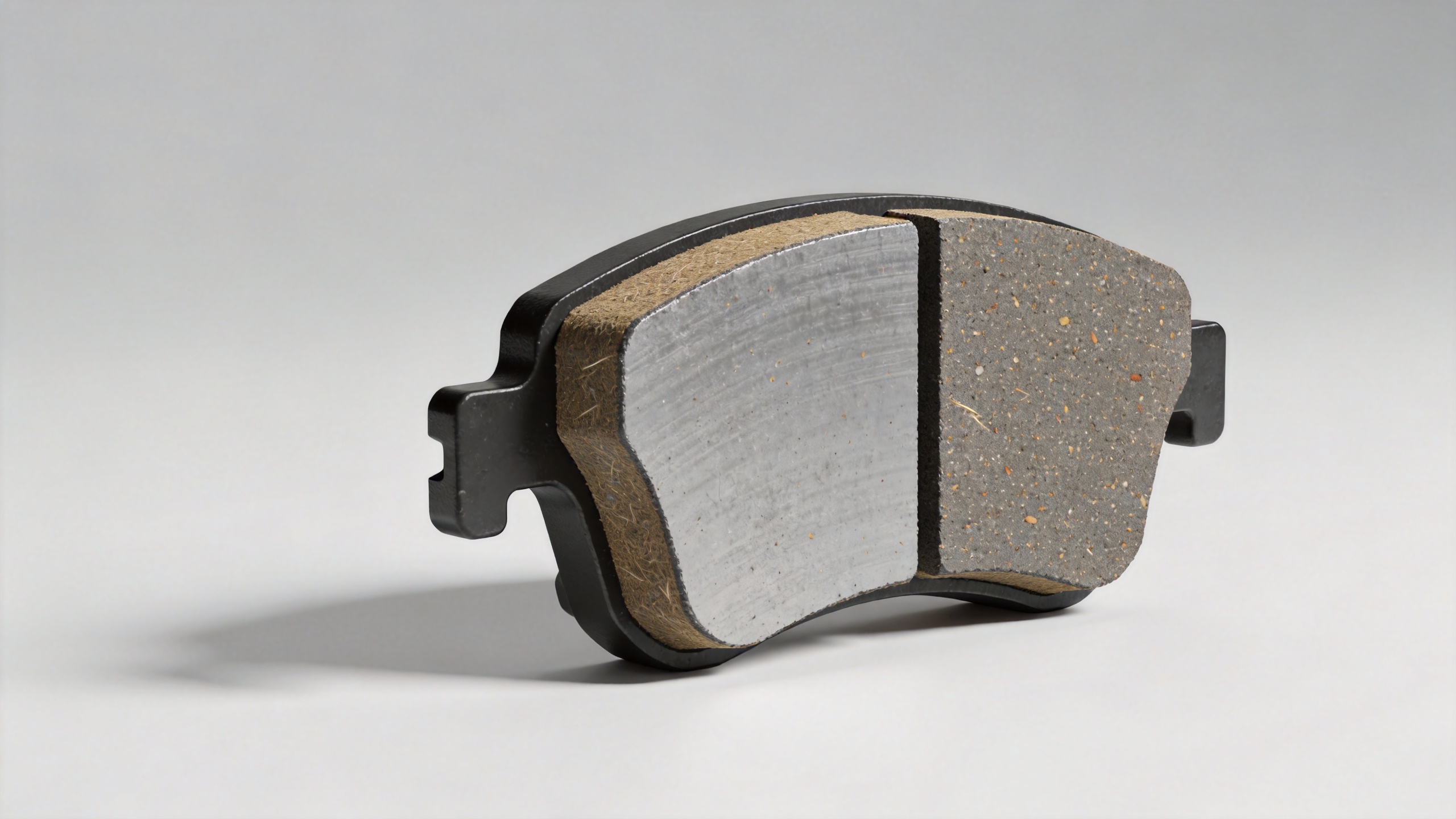
A typical ceramic friction material combines ceramic fibers or ceramic-based particles with binders, fillers, friction modifiers, and sometimes small metallic constituents. The finished friction layer is bonded to a steel backing plate, but the backing plate itself is not the ceramic material. In a practical ceramic brake pads vs organic brake pads comparison, it is the friction layer—not the full pad assembly—that drives most differences in dust, noise, and feel.
Think of the formulation as a controlled system. Fibers help reinforce the friction layer; binders hold the formulation together; fillers shape bulk properties; and friction modifiers tune how the pad behaves against the brake disc. Ceramic constituents can contribute to stable, refined friction behavior, but a ceramic pad is not simply “ceramic plus glue.”
The main ingredient groups and what they do
Ceramic fibers and mineral particles
Ceramic-oriented fibers and fine mineral particles are used to support the material’s thermal and friction characteristics. Their presence is one reason ceramic brake pads vs organic brake pads is often framed around cleaner wheels and quieter daily driving. However, neither property follows automatically from the word “ceramic” alone; compound design and vehicle fit remain important.
Resins and other binders
Resin systems bind the ingredients into a durable friction block. A well-matched binder must retain structural integrity through repeated braking cycles without making the pad too aggressive or too brittle. This is why two pads marketed under the same material category can feel different in use.
Friction modifiers and fillers
Friction modifiers help the pad achieve a controlled coefficient of friction across ordinary operating conditions. Fillers can influence density, compressibility, heat behavior, and noise response. Some formulas may include metallic ingredients for specific functions, but it is inaccurate to assume that every ceramic formula contains the same metals or the same quantity.
Why ceramic does not mean pure ceramic
The phrase “ceramic brake pad” can create the wrong mental picture. Pure ceramic would not provide the full balance needed for road vehicles on its own. The real engineering task is to make a composite that works with the disc, caliper, hardware, tire grip, and intended duty cycle. For that reason, a sensible ceramic brake pads vs organic brake pads evaluation looks beyond a single material claim.
Organic pads also use blended friction materials, often with more organic compounds and fibers. They can be a suitable choice where soft initial response, cost, or specific vehicle requirements are priorities. Ceramic pads commonly target a different compromise: controlled everyday braking, reduced visible dust, and lower noise potential. Neither category is automatically the preferred choice for every car.
Ceramic brake pads vs organic brake pads: practical differences
| Decision point | Ceramic pads | Organic pads |
|---|---|---|
| Material concept | Composite with ceramic-oriented constituents, binders, modifiers, and fillers | Composite with organic compounds, fibers, binders, modifiers, and fillers |
| Dust expectation | Often selected for lower visible dust in normal passenger-car use | Dust behavior depends strongly on formulation and use |
| Noise target | Often designed for refined, quiet operation | Can be quiet, but results vary by compound and installation |
| Selection focus | Everyday driving comfort and clean-wheel priorities | Vehicle-specific response and cost priorities |
This table is a starting point, not a substitute for OE fitment and application validation. In the real-world ceramic brake pads vs organic brake pads decision, disc condition, shim design, hardware condition, bedding procedure, and driving environment all influence the result.
What low-noise ceramic brake pads need beyond the friction formula
Low noise ceramic brake pads depend on more than the friction material. Noise can be affected by backing-plate stiffness, shims, chamfers, slots, caliper hardware, disc runout, and installation quality. A compound designed for a quieter response can still make noise if the disc surface is poor or the hardware is worn. When sourcing low noise ceramic brake pads, request vehicle coverage, material positioning, and quality-control details rather than relying on category language alone.
For example, the CX-D1210 no noise premium ceramic brake pad for TOYOTA is a product-specific option that should be evaluated against confirmed Toyota fitment and the buyer’s target market requirements. Its name should not be treated as proof of unverified performance specifications.
A sourcing checklist for ceramic brake pads
- Confirm the vehicle platform, disc type, and intended driving conditions.
- Ask whether the supplier’s ceramic brake pads vs organic brake pads recommendation is based on the exact application rather than a broad claim.
- Review friction-material positioning together with shim, slot, chamfer, and hardware design.
- Assess dust, noise, wear, and pedal-feel priorities as a package.
- Validate samples through the buyer’s normal fitment and performance process.
Bottom line
Ceramic brake pads are made from carefully balanced composite friction materials that may include ceramic fibers or particles, binders, fillers, and friction modifiers. The right ceramic brake pads vs organic brake pads choice depends on the application and desired trade-offs—not on the assumption that ceramic means a single ingredient or a universally superior pad. For everyday passenger-car programs, low-dust and low-noise goals can make ceramic formulations worth evaluating, provided the fitment and complete brake system are properly matched.