 EN

Brake Disc Warping: Causes, Symptoms, and Replacement Checks
Brake disc warping is a useful search term, but it should start a diagnosis rather than end one. When a driver reports pedal pulsation, steering-wheel shake, or a vibration during braking, a wholesale buyer or service team needs to separate a visible disc problem from disc thickness variation, uneven pad-material transfer, hub runout, or an installation issue. That distinction matters when you are confirming the right replacement part and planning a credible brake-service conversation.
For brake-component sourcing, begin with the vehicle application, the braking duty, the mating pad condition, and the inspection method. A disc that appears discolored or feels rough may need replacement, but a label such as “warped” does not identify the root cause by itself.
What brake disc warping can mean in practice
In everyday workshop language, brake disc warping often describes a braking vibration. True permanent distortion can occur after severe thermal stress, yet the same symptom may come from uneven disc thickness, non-uniform pad deposits, corrosion on the hub mounting face, or excessive brake rotor runout. A technician should therefore measure the component before a buyer identifies the disc as the only failed part.
This is the key shift in approach: a symptom is not a fitment specification. For distributors and wholesalers, the practical question is whether the replacement disc, pads, hub surface, and installation process form a compatible system for the vehicle and its operating conditions.
Common causes behind the complaint
Heat load and uneven cooling
Repeated high-energy stops, dragging brakes, overloaded use, or a caliper that does not release correctly can raise disc temperatures. If one area experiences a different thermal history from another, the braking surface may develop condition changes that later show up as pulsation. Heat marks alone are not a complete diagnosis; inspect the pad, caliper movement, and driving duty alongside the disc.
Disc thickness variation and pad transfer
A disc does not need to be visibly bent to produce a pedal response. Variation in the braking surface or uneven transfer of pad material can change friction as the disc turns. This is why a condition report should say what was measured and observed instead of simply recording brake disc warping.
Hub condition and brake rotor runout
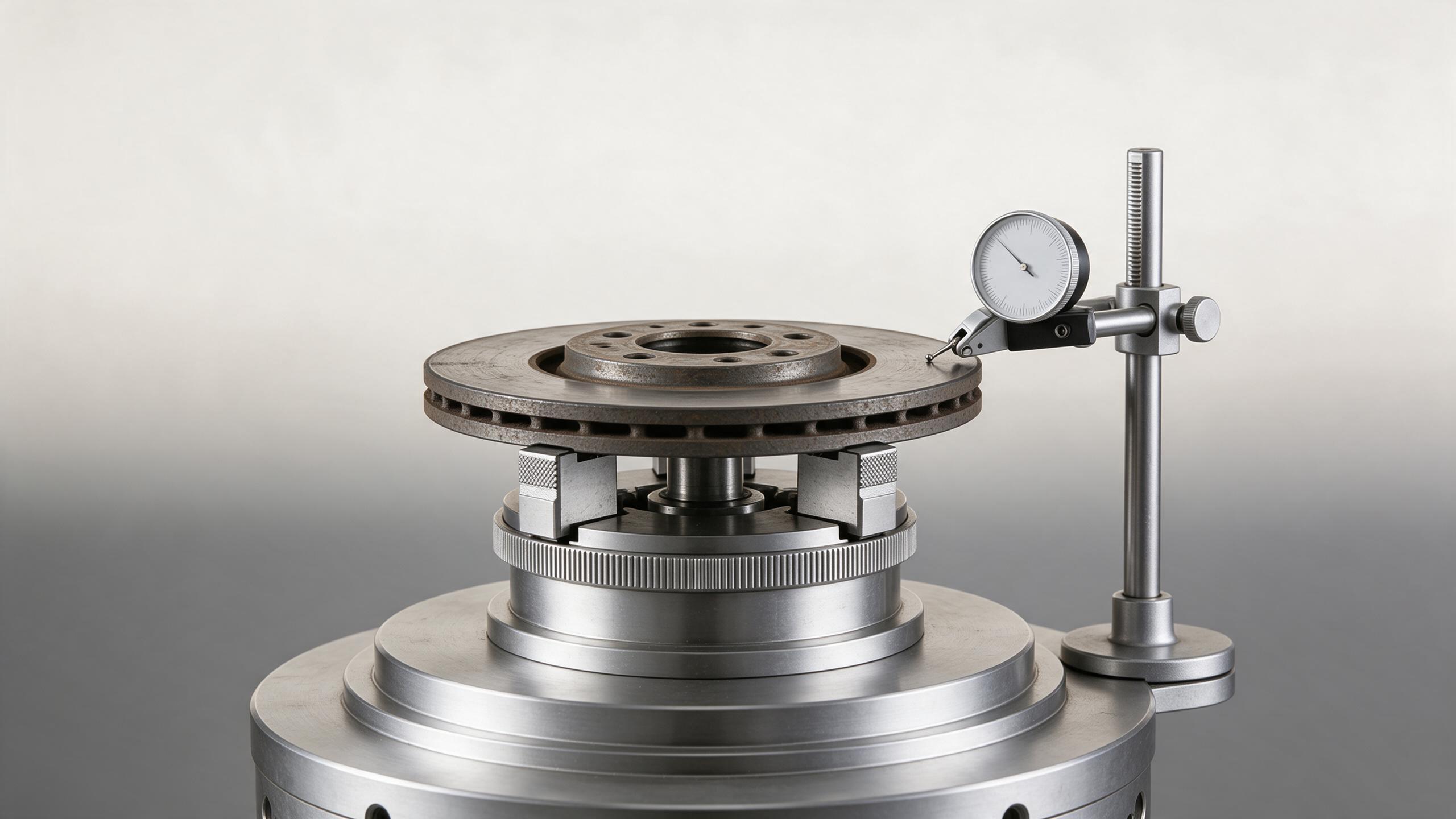
Rust, dirt, burrs, or damage on the mounting face can keep a new disc from seating squarely. The resulting brake rotor runout may contribute to later thickness variation. During inspection, clean the hub contact face, secure the disc as specified for measurement, and use a dial indicator where the vehicle manufacturer procedure calls for it. Compare the reading with the applicable vehicle service specification rather than using a universal limit.
Part selection or installation mismatch
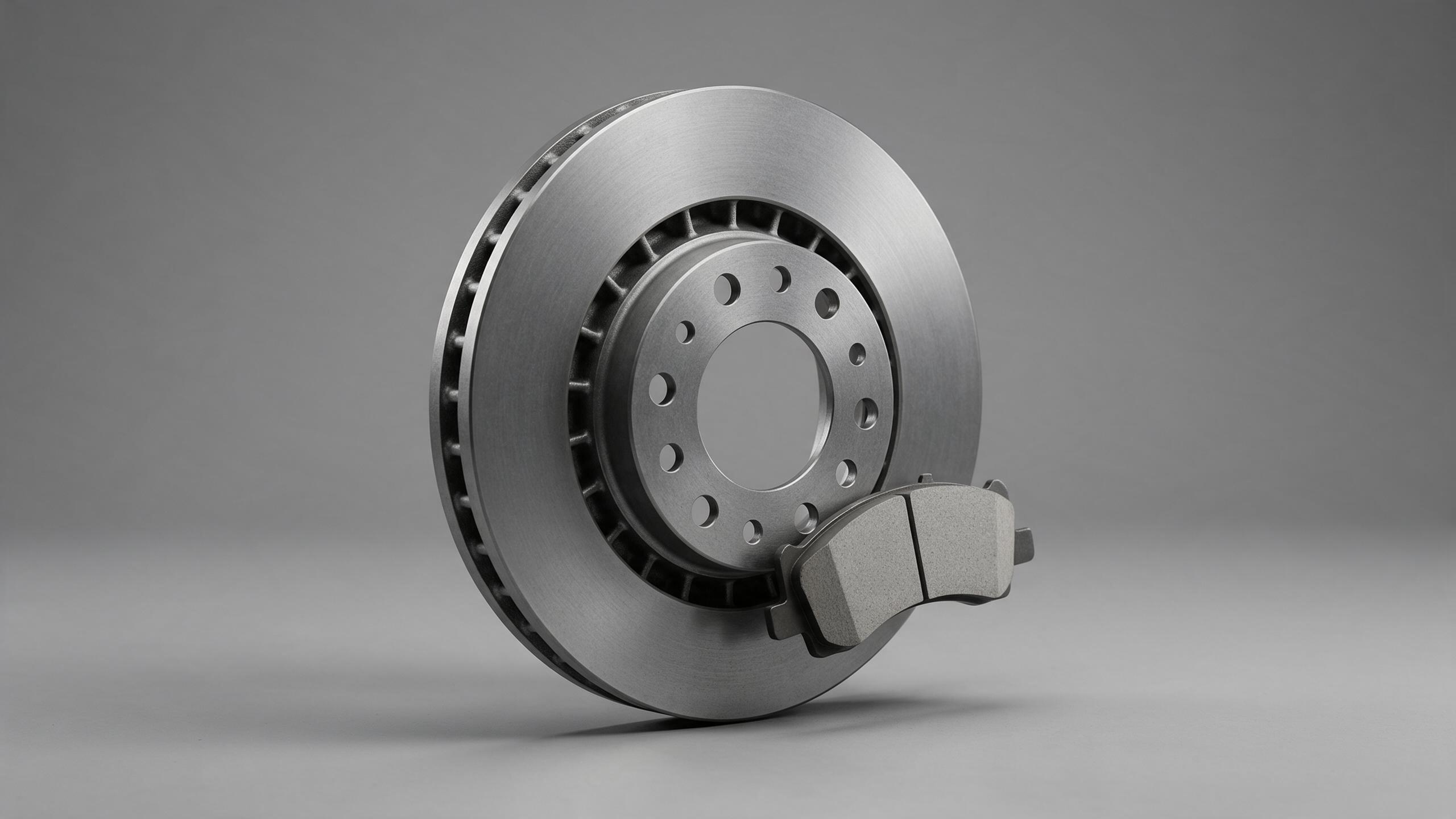
A replacement disc must match the confirmed application and brake configuration. Before ordering, verify the OE or cross-reference number, axle position, diameter, thickness, height or offset, center bore, bolt pattern, ventilation design, and any handedness. These checks are especially important when vehicles in a fleet or distribution program have similar names but different brake packages.
Symptoms that justify a structured inspection
- Pedal pulsation that appears mainly under braking.
- Steering-wheel shake during braking, particularly from road speed.
- A repeated vibration through the vehicle body when the brakes are applied.
- Uneven pad wear, scoring, heat discoloration, or friction-surface irregularities.
- A complaint that returns soon after discs or pads were replaced.
None of these signs proves one cause. Brake disc warping may be part of the discussion, but wheel balance, suspension condition, bearing play, caliper operation, and pad compatibility can affect the symptom. A trained technician should assess braking-system safety before the vehicle returns to service.
Replacement checks for buyers and service teams
Use the following sequence to turn a complaint into a purchase-ready record:
- Confirm the application. Record make, model, year, engine or brake-system variant, axle position, and existing disc reference.
- Inspect the full brake corner. Check pads, caliper slides or hardware, hose condition, hub face, wheel bearing condition, and signs of dragging or overheating.
- Measure before deciding. Measure disc thickness, inspect for cracking or severe corrosion, and check brake rotor runout with appropriate equipment when required. Use the vehicle manufacturer’s specifications for service limits.
- Decide on serviceability. If the disc is below its marked or specified minimum thickness, cracked, heavily damaged, or otherwise outside the applicable requirement, replacement is generally the appropriate path. If machining is being considered, confirm that the finished disc will remain within specification.
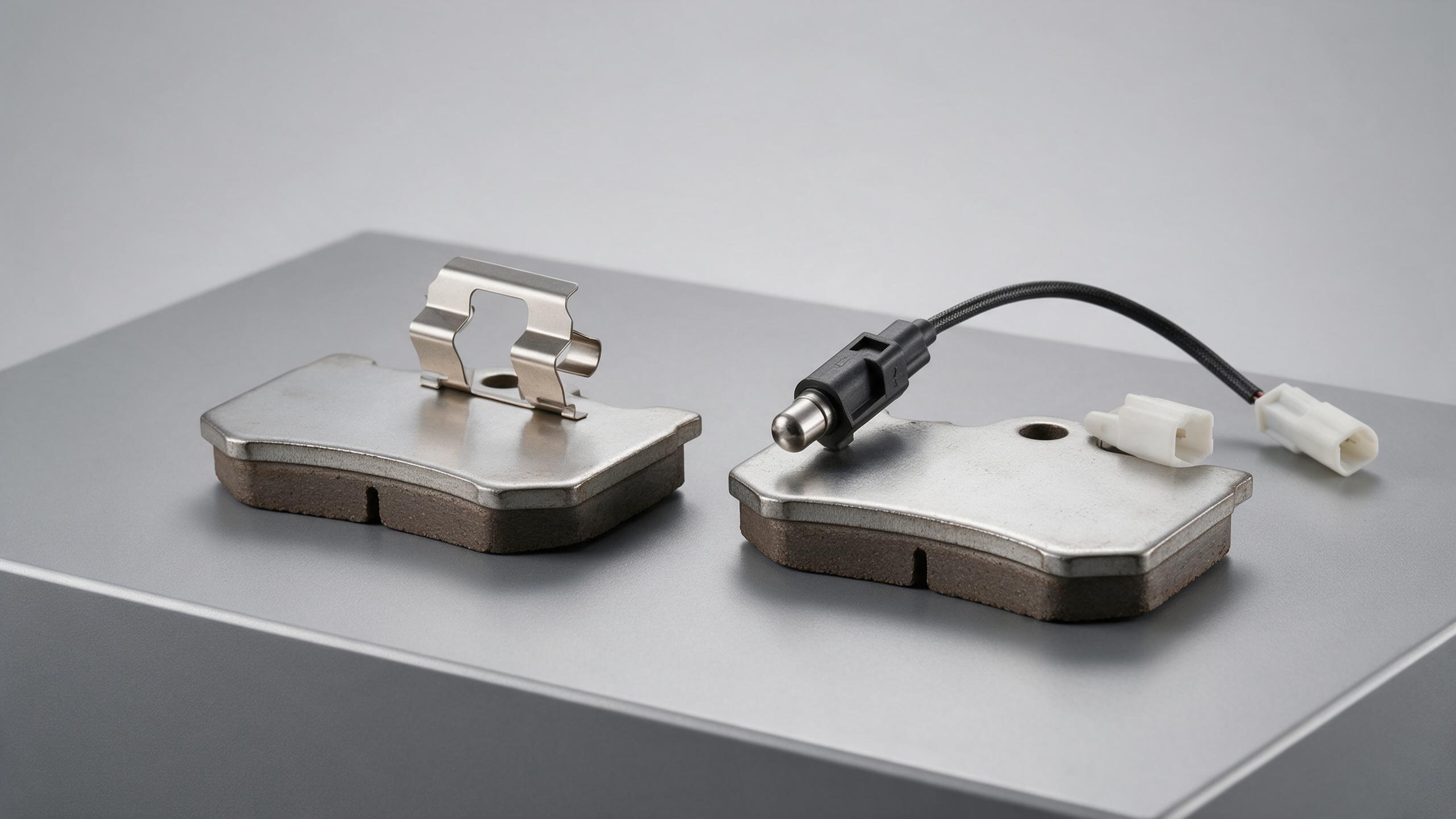
- Match the replacement package. Pair the confirmed disc with suitable pads and installation hardware, then follow the bedding-in guidance and torque procedure applicable to the vehicle.
How to communicate the requirement when sourcing discs
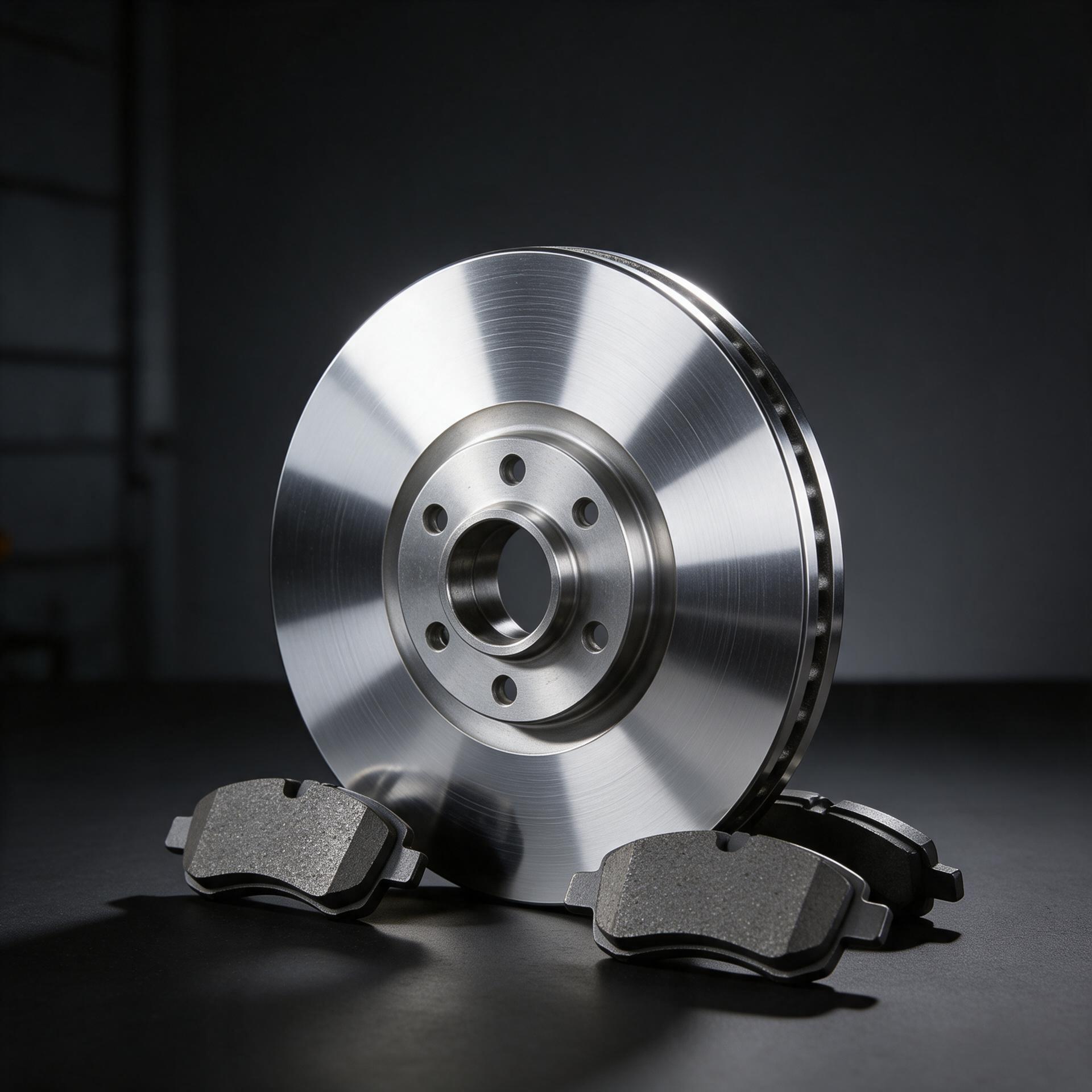
A useful sourcing request includes the vehicle application, the cross-reference or original part number, requested quantity, axle position, required dimensions, and any available inspection notes. For a product record tied to a confirmed application, review the SDCX 1647867480 RN1861V brake disc for Citroën, Opel, and Peugeot applications alongside the final fitment data. The product title supports application discussion; it does not replace verification against the vehicle and catalogue reference.
For wholesale programs, retain the measured condition and the confirmed application with the inquiry. This reduces avoidable returns caused by ordering a disc that looks similar but differs in dimensions or brake configuration.
Frequent mistakes to avoid
- Replacing discs without checking why the previous set developed the complaint.
- Measuring only the disc while skipping the hub mating surface and caliper function.
- Using a generic thickness or runout number instead of the applicable specification.
- Assuming the same model name uses one brake configuration across every vehicle.
- Fitting new discs with worn, contaminated, or incompatible pads without assessing the full system.
Closing checklist
Brake disc warping should lead to a measured, vehicle-specific check: confirm the symptom, inspect the related brake components, measure the disc and mounting condition, then verify exact fitment before replacement. This approach gives service teams clearer diagnostic notes and gives distributors a stronger basis for matching discs to the right request.
If a buyer needs to validate an application, provide the vehicle data and part reference first. A component supplier can then support a more focused catalogue and fitment discussion without making assumptions about the vehicle’s existing condition.