 EN

Brake Pad Wear Indicators: How They Work and What Buyers Should Check
A brake pad wear indicator is a service-warning feature built into a brake-pad system or fitted beside it. It gives drivers and workshops a signal that friction material is approaching a planned replacement point. For distributors and wholesale buyers, the useful question is not simply whether a brake pad wear indicator is present. The question is whether its type, position, connector, and pad geometry match the intended vehicle application.
From a wholesale buyer’s perspective, a brake pad wear indicator should be reviewed alongside the vehicle application, friction-material specification, axle position, and validation method. That approach avoids treating a warning component as a universal accessory. A mechanical tab and an electronic sensor can serve a similar maintenance purpose, but they are not interchangeable parts.
What a Brake Pad Wear Indicator Does
The role of a brake pad wear indicator is to communicate pad wear before the friction layer reaches a condition that calls for immediate service attention. It does not measure every aspect of brake health. Rotor condition, caliper movement, hardware, driving load, and the vehicle’s own service instructions remain relevant.
For buyers, the value of a brake pad wear indicator is practical: it helps define the expected service configuration of a pad set. A listing may include a tab on one backing plate, a separate sensor lead, or neither item. Purchase orders should state that configuration clearly rather than assume that every pad set includes the same warning method.
Two Common Brake Pad Wear Indicator Designs
Mechanical acoustic tabs
A mechanical brake pad wear indicator is usually a shaped metal tab attached to the backing plate. As the pad wears, the tab can contact the rotor and create an audible signal. Its operation depends on the tab location, pad orientation, rotor clearance, and the remaining friction material. It is a simple arrangement, yet it is still application-specific: a tab intended for one pad shape or axle location may not suit another.
Electronic wear sensors
An electronic brake pad wear indicator uses a sensor element and a vehicle circuit to trigger a dashboard message or warning lamp. Depending on the application, the sensor may be integrated with the pad, clipped into a pad feature, or supplied as a separate service part. Buyers should confirm connector style, cable length, mounting point, sensor count, and whether the sensor is intended for the front or rear axle.
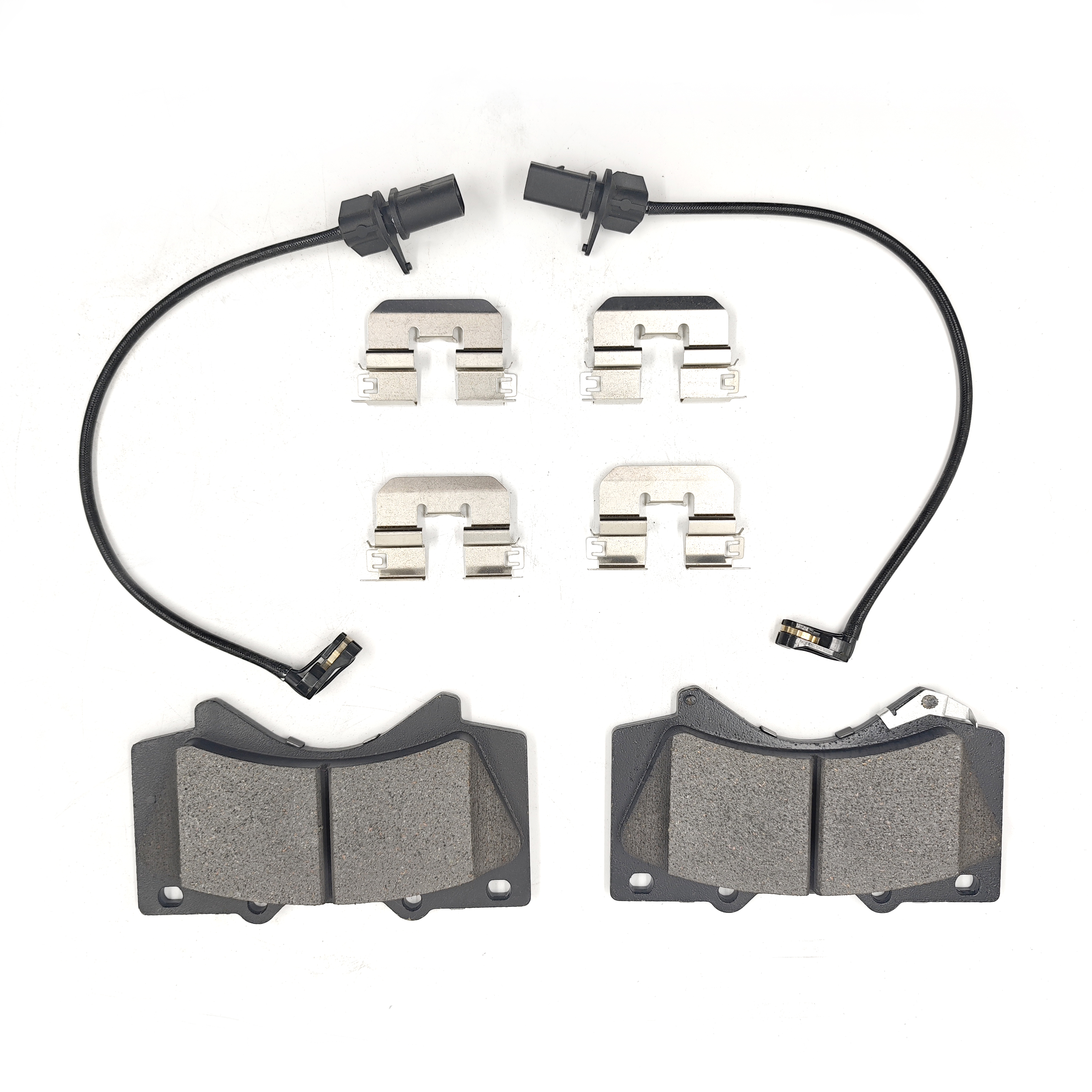 Mechanical tabs and electronic sensors use different fitment and inspection checks.
Why Thickness Checks Still Matter
A brake pad wear indicator is a warning aid, not a substitute for inspection. A brake pad thickness chart can help a service team organize visual checks, but it should be treated as a planning reference rather than a universal replacement rule. Industry references often describe new passenger-car friction material in an approximate 8–12 mm range and identify roughly 3–4 mm as a point for replacement planning. The vehicle manufacturer’s service specification and the actual operating condition take priority.
When reviewing a brake pad thickness chart, verify what is being measured. The friction material is measured, not the full backing-plate thickness. Inner and outer pads can wear differently, so one accessible pad may not describe the entire axle set. A brake pad wear indicator may activate at a point that differs from a generic chart because the component is engineered for a specific application.
Buyer Checks Before Sourcing a Brake Pad Wear Indicator
For an awareness-stage discussion, start with the vehicle and service configuration before discussing supplier preference. Use the following checklist when evaluating a brake pad wear indicator or a pad set that includes one:
- Vehicle application: confirm make, model, model year, engine or brake-system variant, and axle position through the relevant catalogue or service data.
- Indicator method: specify mechanical tab, electronic sensor, or no indicator. Do not use these descriptions as substitutes for part-number validation.
- Pad backing-plate geometry: check the tab or sensor mounting connection against the actual pad shape and mounting direction.
- Electrical connection details: for an electronic brake pad wear indicator, confirm connector form, lead routing, retention clips, and sensor quantity.
- Material and duty cycle: assess the friction formulation against heat load, noise expectations, dust considerations, and normal operating conditions.
- Inspection documentation: agree on drawings, samples, fitment checks, and packaging labels that identify the indicator configuration.
Common Purchasing Errors
One common error is ordering a brake pad wear indicator by appearance alone. Two components may look alike while their lead length, connector keying, or mounting detail differs. Another error is assuming that a warning tab means the pad set includes an electronic sensor, or the reverse. These differences should be visible in the quotation and confirmation process.
A second error is using a brake pad thickness chart as though it were a vehicle-specific service manual. Thickness references help staff communicate wear status, but they do not override the vehicle manufacturer’s criteria. When vehicle duty, rotor wear, or uneven pad wear is present, a workshop should assess the full brake condition before determining the next service action.
How to Communicate Requirements to a Supplier
A useful request for a brake pad wear indicator includes the vehicle application, axle, reference number, requested indicator type, required sensor position, and any packaging or labeling requirement. Adding photographs or a drawing of the existing part can help clarify geometry, but application data should remain the basis for confirmation.
For a front-disc pad sourcing discussion, buyers can review a compatible front-disc brake pad listing as part of their application-comparison process. The listing should not replace a fitment check; it is a starting point for confirming the pad arrangement and the requested warning configuration.
Final Takeaway
A brake pad wear indicator is most useful when it is treated as one part of a matched brake-pad system. Mechanical tabs provide an audible prompt; electronic sensors communicate through the vehicle’s warning circuit. In either case, correct fitment, axle position, friction-material selection, and documented inspection criteria determine whether the component is appropriate for the order.
Before placing a bulk order, confirm the vehicle application, indicator design, backing-plate geometry, electrical details where applicable, and the measurement method behind any brake pad thickness chart. This gives purchasing and service teams a clearer basis for product comparison and follow-up technical communication.