 EN

How to Choose Ceramic Brake Pads for Wholesale Inventory
For a brake-parts distributor, buying ceramic brake pads is not simply a matter of picking the lowest unit price. A workable inventory needs the right vehicle coverage, a friction-material position that matches the market, dependable fitment records, and documents your sales team can use before a buyer asks for them. This guide gives wholesalers a practical framework for building a ceramic brake pad range without treating every vehicle application as the same opportunity.
Start With the Vehicles You Need to Cover
Begin with sales history, local vehicle population, and the OE reference numbers most often requested by workshops and retailers. Group demand by make, model, model year, axle position, and pad shape. This prevents a common stocking mistake: carrying several visually similar ceramic brake pads while missing the applications that generate repeat orders.
Fitment must be checked as a record, not inferred from a product photo or a shared pad outline. Ask the supplier to provide OE cross references, dimensions, backing-plate shape, wear-indicator position, hardware requirements, and the vehicle applications used for the fitment claim. Keep the revision date beside each listing. When a distributor operates in more than one country, separate the application list by market because the same vehicle name can have different brake configurations.
A useful first assortment normally focuses on the high-turning passenger-car applications in the target market, then adds lower-volume references only when margins, minimum order quantities, and service levels justify them. This approach keeps ceramic brake pads available where they are most likely to move while avoiding a catalogue that is broad but difficult to replenish.
Match the Ceramic Material Position to the Customer Segment
Ceramic brake pads are generally positioned around quiet operation, lower visible dust, and a refined everyday-driving experience. That positioning may suit passenger cars, urban commuting, and buyers who care about wheel appearance and noise complaints. It is not a substitute for checking the actual friction formulation and intended application.
For an inventory decision, compare ceramic brake pads with the alternatives your customers already buy. Semi-metallic and low-metallic options may be requested for different operating priorities, vehicle types, or price points. Rather than declaring one material universally better, define the job each line is expected to do: value replacement, low-dust daily driving, fleet service, or a market-specific premium offering.
| Inventory question | What to verify before ordering |
|---|---|
| Noise expectations | Requested formulation information, shim or hardware inclusion, and how the supplier documents noise-control claims. |
| Dust expectations | How “low dust” is defined in the product material and whether it is a general positioning claim or a tested claim. |
| Operating use | Target passenger-vehicle applications, axle position, driving profile, and any stated exclusions. |
| Range architecture | Where ceramic brake pads sit beside semi-metallic or low-metallic lines so sales teams can explain the difference consistently. |
Consumer-oriented search results often emphasize quietness and dust, but a wholesaler should convert those features into controlled selling points. Give the sales team language that is accurate for the supplied specification, and avoid promising identical results on every vehicle, rotor condition, or installation.
Make Low-Dust and Low-Noise Claims Verifiable
Low dust and low noise are valuable reasons to stock ceramic brake pads, yet both claims need context. Noise can be affected by pad design, shims, hardware, rotor condition, caliper function, bedding procedure, and vehicle use. Dust appearance can also vary by wheel finish, driving cycle, and the comparison material. Ask for the test method, the application scope, and the wording approved for catalogues and packaging.
This is also the point to check the destination market’s requirements. ECE R90 is commonly referenced in aftermarket brake-pad supply discussions, but a distributor should verify which approvals, labels, traceability records, and documentation apply to each market and each product reference. In the United States, NHTSA has stated that no Federal Motor Vehicle Safety Standard is specifically applicable to new brake pads; that does not remove the need to verify local rules, product-liability expectations, and customer specifications.
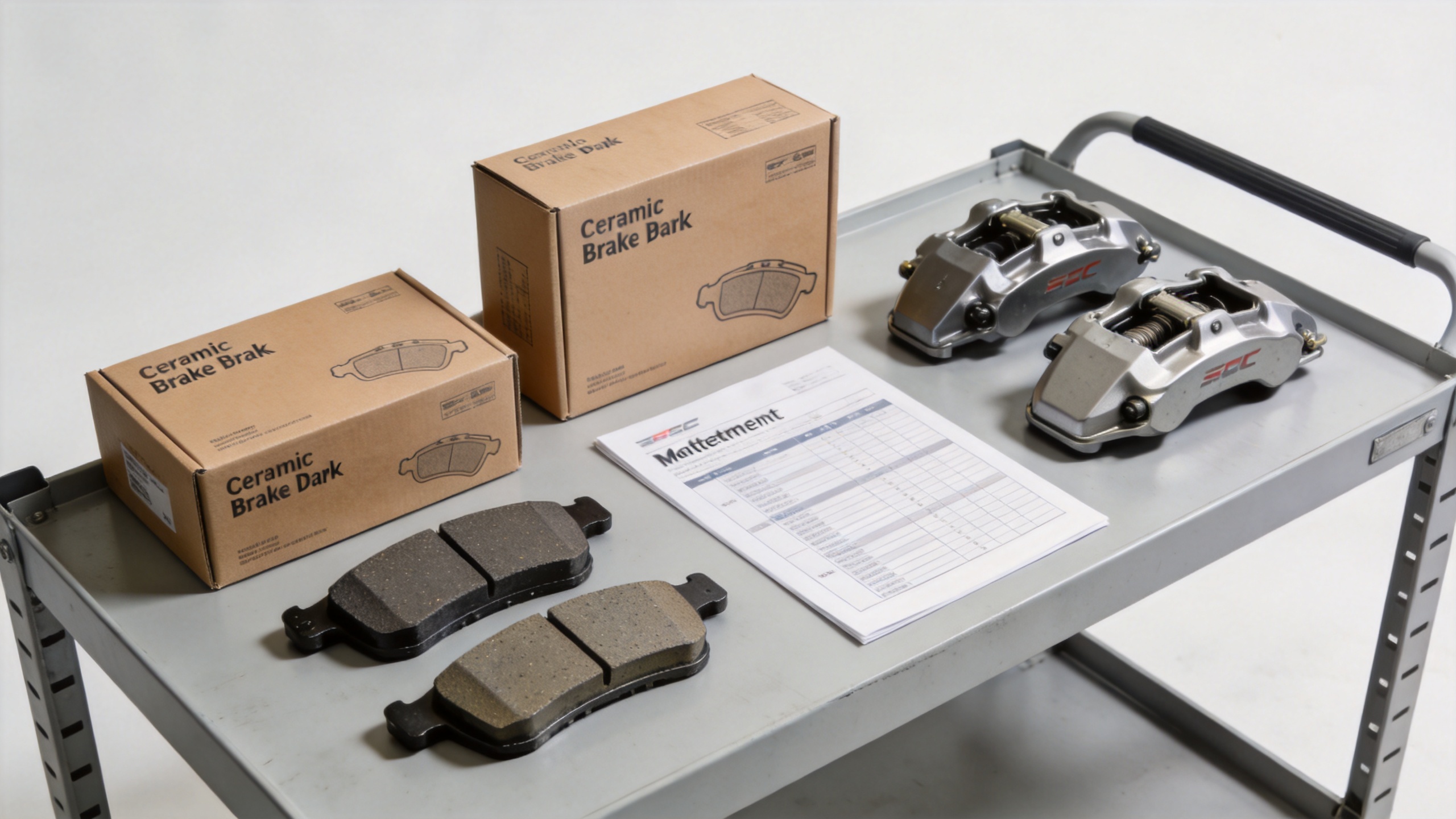
Build a release folder for every stocked reference. It can include the current drawing or fitment sheet, material designation supplied by the manufacturer, applicable compliance documents, lot traceability fields, installation notes, and packaging artwork. This makes ceramic brake pads easier to sell responsibly and reduces the risk of sales teams relying on an old claim copied from another application.
Check Specifications Before You Commit to a Purchase Order
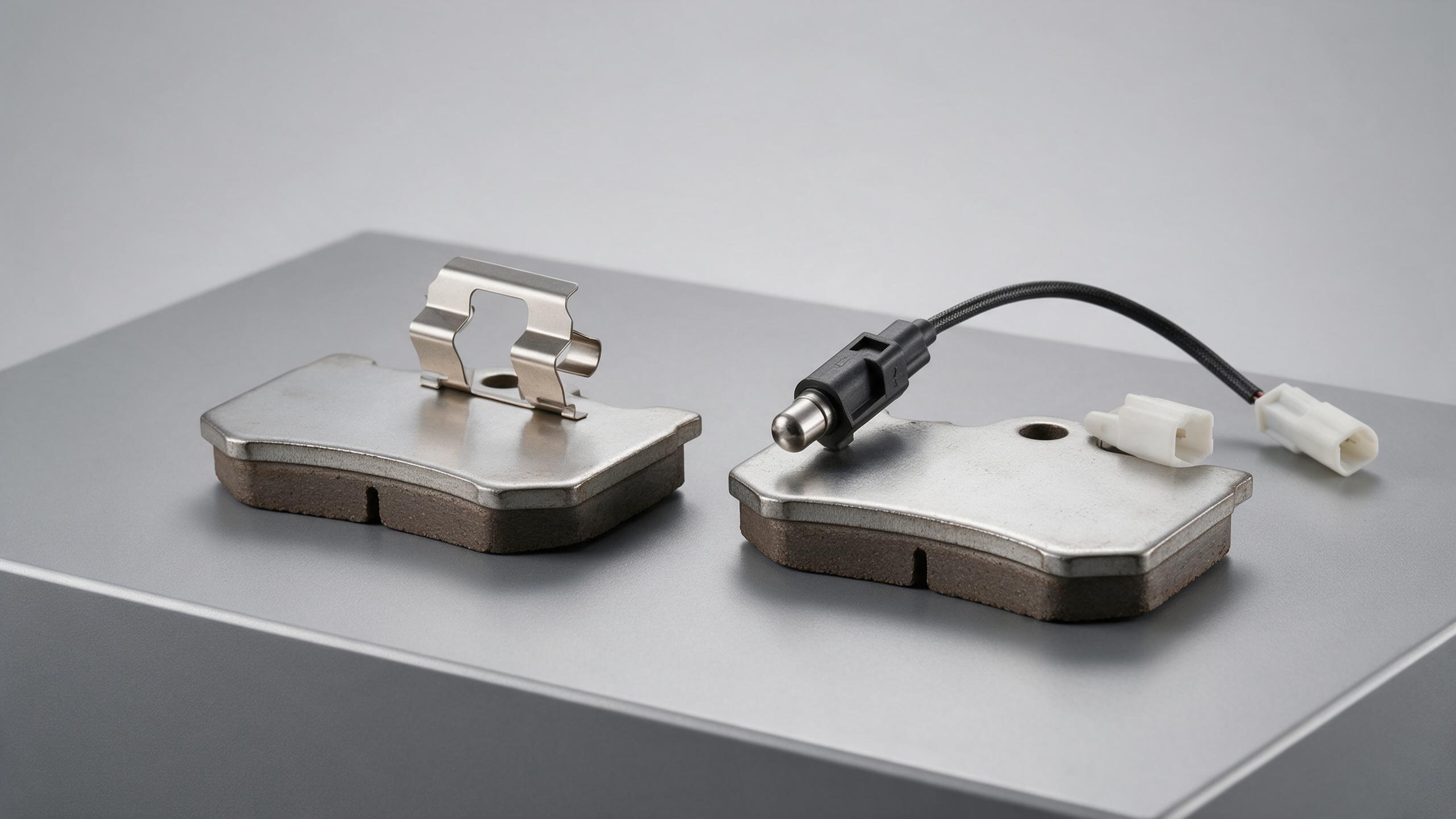
Use a consistent approval checklist before adding a new reference. First confirm the part number and vehicle mapping. Then compare pad dimensions, backing plate, friction-block layout, chamfers, slots, shims, clips, and sensor provisions with the relevant application data. For a wholesale program, the ability to trace these details is as important as the initial sample.
- Request an application list with OE and aftermarket cross references.
- Confirm left/right, inner/outer, and front/rear distinctions where applicable.
- Ask what hardware is included and what must be supplied separately.
- Record the packaging quantity, barcode format, carton dimensions, and pallet plan.
- Agree on sample approval, production-lot identification, and a process for fitment corrections.
- Review lead time, minimum order quantity, and replenishment terms against expected stock turns.
For example, wholesalers evaluating D1544 D1594 D1813 D1812 58302-C8A50 58302-3ZA70 4050047600 wholesale ceramic brake pads should validate each OE reference, vehicle application, and order configuration against the supplier’s current documentation before listing it. The product title identifies the references and target makes; it should not be treated as a substitute for a complete fitment review.
Build an Inventory Plan That Can Be Replenished
A ceramic brake pad line becomes more useful when purchasing, sales, and catalogue teams work from the same data. Assign every reference a demand tier, target stock level, reorder point, and review date. High-turning applications may warrant deeper coverage; low-turning applications may be better handled through planned orders or a narrower range.
Monitor returns by application and reason. A cluster of fitment returns may indicate a catalogue issue rather than a product issue. A pattern of noise complaints may require a review of installation guidance, hardware inclusion, rotor condition, or the way a claim was presented. These feedback loops help you refine the ceramic brake pads range without assuming the material itself explains every outcome.
A Practical Wholesale Decision Framework
Before placing the next order, ask five questions: Does this reference cover a proven vehicle demand? Is the ceramic brake pad position clear against the rest of the range? Can your team verify its fitment and specifications quickly? Are low-dust and low-noise claims documented for the intended use? Can you replenish it at a quantity and lead time that fit your stock plan?
If the answer is yes, ceramic brake pads can form a focused, credible part of a wholesale brake program. Prioritize clean fitment data, disciplined documentation, and market-relevant coverage. Those controls make it easier to choose products, train sales teams, and give distributors the information they need to buy with confidence.