 EN

How Brake Pad Material Affects Noise, Dust and Wear
Choosing low noise ceramic brake pads is often treated as a simple upgrade decision. In practice, it is a friction-system decision. The pad formulation, rotor condition, shim design, caliper hardware, vehicle load, temperature and bedding process all affect what the driver hears and what remains on the wheel. Ceramic formulations are frequently selected for quieter, cleaner everyday driving, but no material category can guarantee silence or the same wear result on every vehicle.
From a brake-material technical adviser’s perspective, the useful question is not “Which material wins every comparison?” It is “Which friction behavior fits this vehicle, its duty cycle and the validation target?” That change in question helps distributors and brake-pad brands compare products without making a single material property sound absolute.
Why Friction Material Changes the Brake Experience
A brake pad is a composite rather than one substance. Its friction layer can include binders, reinforcing fibers, fillers, abrasives and lubricants. Those ingredients influence the stability of friction as speed, pressure and temperature change. They also influence the transfer layer formed at the rotor interface. When that interface remains stable, braking tends to feel more consistent; when it becomes uneven, vibration, visible dust and wear can rise.
Material selection therefore involves trade-offs. Abrasive ingredients can support friction generation and cleaning of the contact surface, but their amount and hardness may affect rotor interaction. Lubricating constituents can help control friction behavior, yet the formulation must still meet the intended braking response. The finished pad—not the marketing label alone—determines the balance.
Noise: Ceramic Formulas Can Help, but Squeal Is a System Issue
Many buyers consider low noise ceramic brake pads because ceramic-based formulations are commonly associated with lower audible noise in normal passenger-car service. Their fine, dense friction structure can help reduce some vibration tendencies. Still, brake squeal is friction-induced vibration in the wider brake system. Rotor runout, surface finish, pad fit, shims, clips, caliper movement, contamination and bedding can all change the result.
That is why two vehicles using the same pad material may not sound the same. A pad that performs quietly on a clean, compatible rotor can squeal after improper installation or on a rotor with an unsuitable surface condition. For applications where NVH is critical, suppliers should validate the finished pad and hardware combination, not rely only on a ceramic claim. SAE J2521 is one example of an inertia-dynamometer procedure used to evaluate brake squeal under controlled operating conditions.
Dust: Look at Particle Appearance and Cleaning Burden
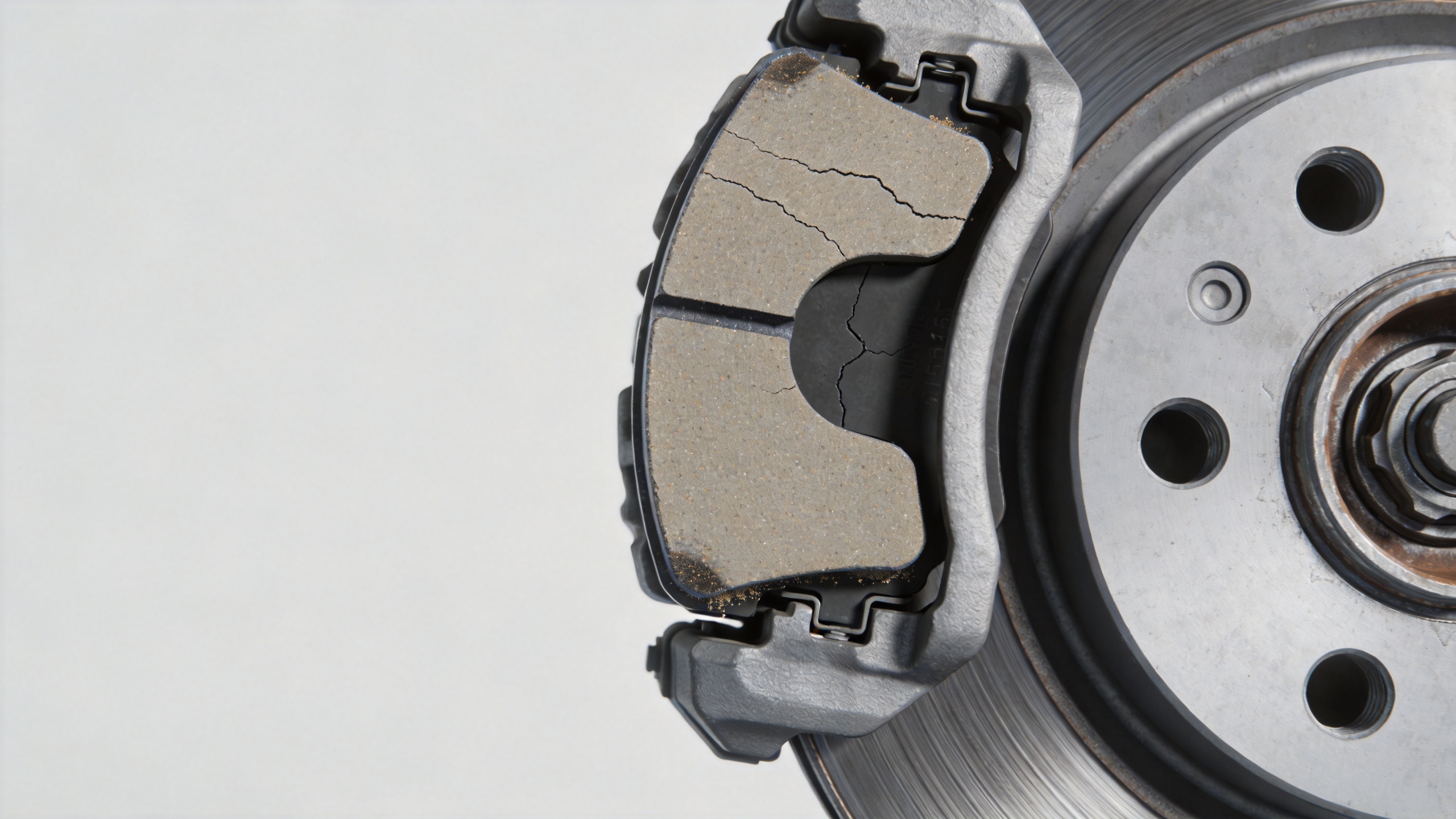
Visible brake dust is generated as the friction pair wears. Ceramic formulas are often chosen when a cleaner wheel appearance is important because their dust may be lighter and less conspicuous than the darker residue associated with some semi-metallic formulations. That does not mean a ceramic pad produces no dust. Every disc-brake system loses material during use, and wheel appearance is affected by driving style, rotor condition, wheel finish and road contamination.
For buyers, the practical comparison is not simply “dust” versus “no dust.” Ask how the formulation balances friction stability, pad mass loss, rotor interaction and the appearance of residue in the intended application. A material that reduces visible residue may be a strong fit for comfort-oriented passenger vehicles, while another formulation may be chosen where different heat or load requirements dominate.
Wear: Separate Pad Life from Rotor Life
Wear is often discussed as though longer pad life automatically means less total braking-system wear. It does not. A hard or highly abrasive formulation can change the balance between pad wear and rotor wear. Heat, repeated high-energy stops, pressure, vehicle mass and the condition of the disc all matter too. A stable friction coefficient across changing conditions is important because unstable contact can increase vibration and create uneven wear patterns.
For example, the auxiliary search phrase brake pad wear mercedes should not be interpreted as a material-only diagnosis. Mercedes-Benz pad wear can be affected by the exact axle application, driving cycle, rotor specification, electronic wear-sensor system, installation quality and pad formulation. The correct approach is to verify the vehicle-specific part number and evaluate the pad-and-rotor pair rather than generalize from brand name alone.
Ceramic, Semi-Metallic and NAO: A Practical Comparison
| Material family | Typical decision strengths | Items to validate |
|---|---|---|
| Ceramic-based | Often selected for low-noise, low-visible-dust passenger-car positioning. | Fitment, rotor condition, cold/hot response and vehicle-specific NVH validation. |
| Semi-metallic | Often chosen where robust friction response and thermal considerations are priorities. | Noise tendency, dust appearance, rotor interaction and application load. |
| NAO / low-metallic NAO | Can be formulated for balanced comfort, friction and wear targets. | Exact formulation, regional requirements and the intended driving cycle. |
This table is a starting point, not a specification. Formulation details within each family can produce materially different results. The right comparison begins with vehicle platform, rotor type, load profile, target comfort level and required validation method.
A Buyer Checklist for Low-Noise Brake Pad Selection
- Confirm the exact vehicle and axle fitment. Noise and wear data are meaningful only when tied to the correct application.
- Define the priority. Is the target low audible noise, lower visible dust, long pad life, rotor protection, or a controlled compromise?
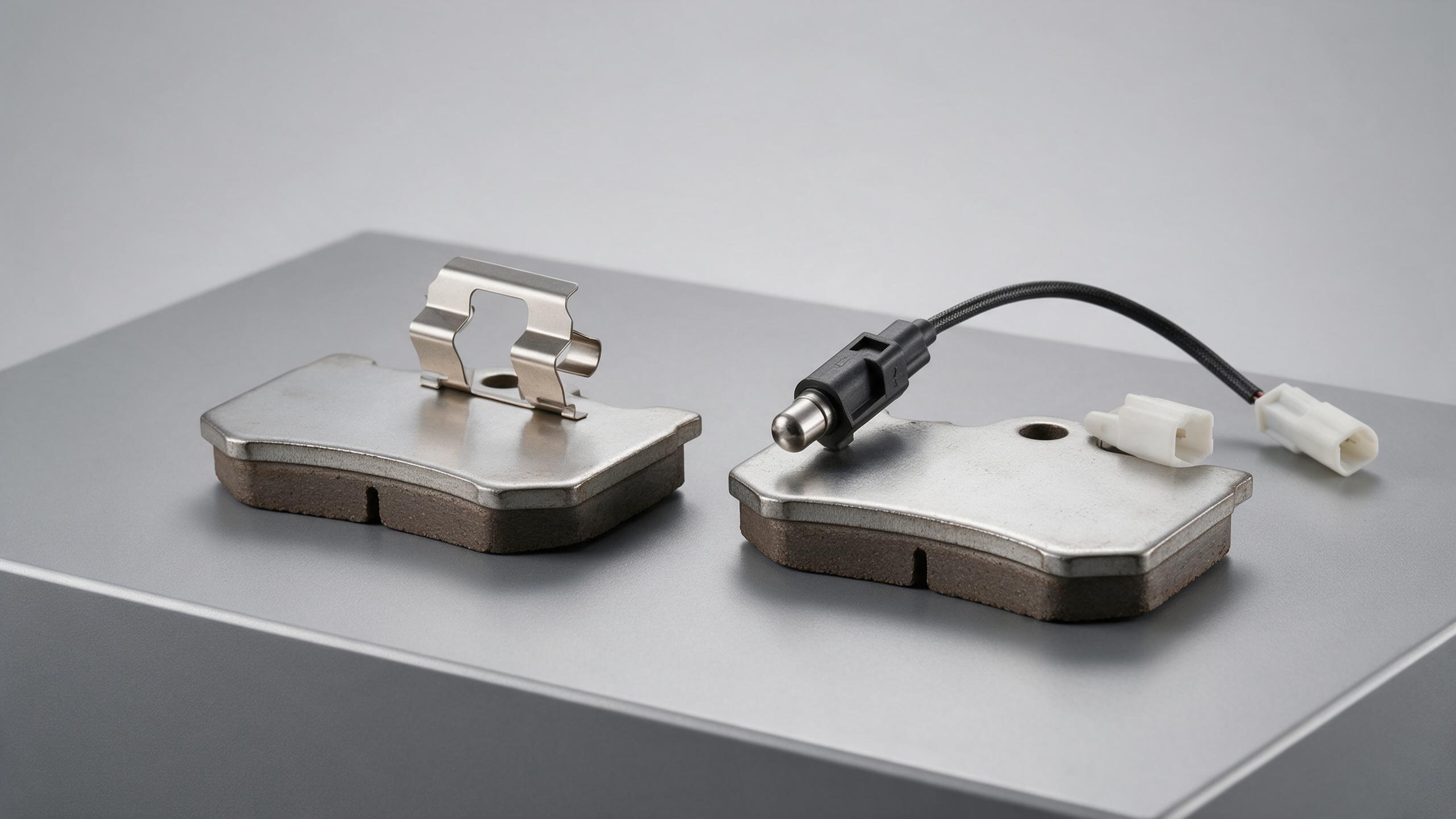
- Check the full friction pair. Evaluate the pad with the intended rotor, shim, clip and caliper hardware.
- Require controlled validation. For premium or fleet programs, request friction, wear and NVH test evidence relevant to the application.
- Specify installation and bedding guidance. A well-matched formula can still disappoint when surfaces or hardware are not prepared correctly.
When Low-Noise Positioning Makes Sense
Low noise ceramic brake pads are usually most relevant when a passenger-car program prioritizes cabin comfort and a cleaner-looking wheel alongside dependable everyday braking. For that position to hold up in the market, the supplier should validate fitment, bedding behavior and the rotor interface on the intended vehicle rather than treating the material name as proof of performance.
For a distributor, specifying low noise ceramic brake pads means documenting the vehicle platform, axle, rotor reference and customer expectation before comparing samples. For a brake-pad brand, it means setting an NVH target and reviewing the whole hardware package. In both cases, low noise ceramic brake pads should be evaluated as a formulation-and-system choice, not as an automatic replacement for every driving condition.
Use Product Selection as a Starting Point, Not a Promise
For Toyota programs where quiet operation is a purchase priority, review the fitment details of the CX-D1210 no noise premium ceramic brake pad for TOYOTA with the relevant vehicle and rotor requirements. For Mercedes-Benz applications, the D1342 ceramic disc brake pads for Mercedes-Benz should likewise be evaluated against exact part fitment and validation needs.
In short, low noise ceramic brake pads can be a sensible direction when comfort and lower visible dust are important. The most reliable result comes from matching the formulation to the application, maintaining the full brake system and verifying performance with the right test plan.