 EN

Low-Dust Brake Pads: What Buyers Should Compare
For distributors, private-label teams, and vehicle-service buyers, a low-dust claim is only useful when it is tied to the right vehicle application and a repeatable validation method. In the brake ceramic category, lower visible wheel dust can be a real purchasing advantage, especially for passenger-car programs where wheel appearance, cabin comfort, and aftermarket reputation all matter. It is not, however, a substitute for comparing friction behavior, wear, fitment, noise control, and supply consistency.
This buyer-focused guide explains how to compare ceramic brake pads without treating one material label as a universal answer. The practical goal is to define the evidence needed before approving a pad for a specific vehicle range and market.
Start with the operating profile, not the low-dust label
“Low dust” describes an outcome, not a complete specification. A brake pad can leave less visible dark residue on wheels while making different tradeoffs in cold response, pedal feel, rotor interaction, high-temperature stability, or cost. Before comparing quotations, define the vehicle class, axle position, expected load, wheel design, climate, driving pattern, and the customer’s main complaint.
For example, a commuter-focused passenger-car program may prioritize quiet operation and cleaner alloy wheels. A vehicle used for frequent mountain descents, towing, or high-load service may require a different balance. A sound comparison asks: under what pressure, speed, temperature, bedding procedure, and rotor condition was the dust claim observed?
Compare friction behavior across the conditions that matter
A brake ceramic formulation should be assessed as a friction system, not as a single ingredient list. Buyers should request a test summary that shows how friction response changes from cold starts through repeated stops and higher temperatures. The important question is not whether a supplier uses the word “ceramic,” but whether the pad delivers predictable braking feel in the defined application.
SAE J2522 is commonly used to evaluate brake friction performance under changing pressure, speed, and temperature conditions. The named procedure alone is not a product approval; ask for the applicable test conditions, the measured outputs, deviations, and the acceptance criteria used by the supplier. This keeps comparisons between ceramic brake pads meaningful rather than promotional.
- Ask for friction stability and recovery information across the intended temperature range.
- Confirm whether front and rear axle requirements are evaluated separately.
- Check that the test rotor, pad geometry, and bedding process are relevant to the target part number.
- Document any performance limits that should trigger a design review or a customer-use restriction.
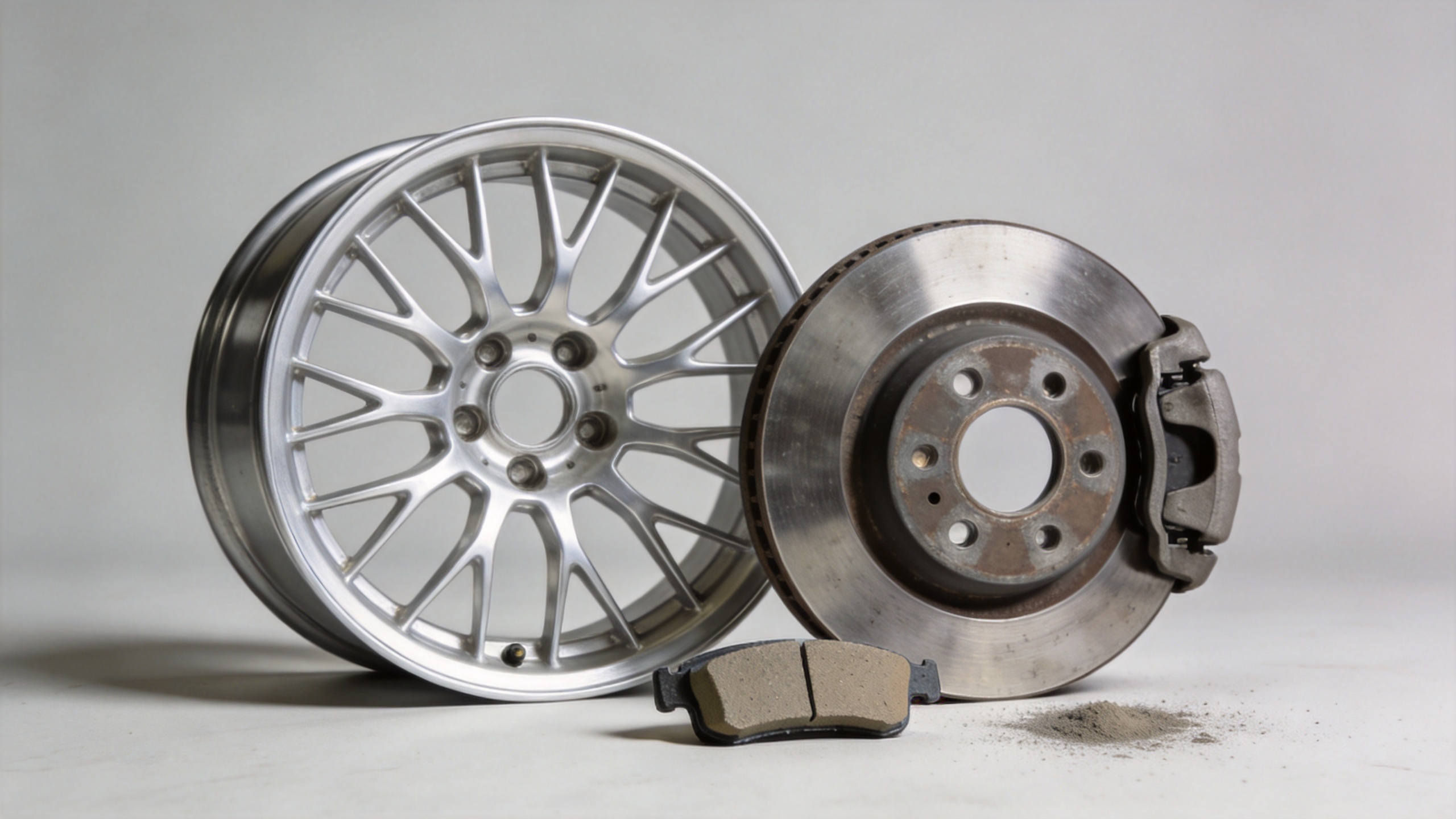
Evaluate dust together with rotor wear and wheel-cleanliness expectations
Low visible dust is a customer-facing benefit, but procurement teams should convert it into an evaluation plan. Ask how dust is measured or rated, how the wheel surface is assessed, and whether the comparison used the same rotor condition and driving cycle. A cleaner wheel after a short controlled test does not necessarily predict long-term appearance in every market.
Also compare pad wear and rotor wear. An aggressive attempt to reduce dust can shift material transfer or wear behavior elsewhere in the system. A balanced brake ceramic evaluation records pad thickness loss, rotor condition, noise observations, and visible residue after a defined sequence. Where system-level evidence is needed, brake-effectiveness procedures such as SAE J2430 can help structure the request; buyers should still compare the actual reported conditions and results rather than assuming a test name guarantees suitability.
Make noise and comfort part of the same comparison
Many buyers connect ceramic brake pads with quieter braking, but noise is influenced by the full corner assembly: pad formulation, chamfers, shims, backing plate, caliper condition, rotor finish, hardware, installation practice, and the duty cycle. Request noise-test context and field feedback that specify the vehicle and the conditions under which squeal, groan, or judder were assessed.
For a distributor program, it is useful to define a return-prevention checklist. It can include correct pad-to-caliper fit, supplied hardware, edge treatment, packaging instructions, and the bedding guidance given to installers. This approach is more reliable than approving ceramic brake pads on an isolated quietness claim.
Verify fitment, hardware, and part-number control
Fitment errors can erase the value of a carefully chosen brake ceramic formula. Compare drawing control, pad dimensions, backing-plate geometry, slot and shim details, sensor provisions, and hardware inclusion for every target reference. Confirm cross-reference logic and packaging labels before committing to a broader range.
When reviewing a Toyota RAV4 application, buyers can use the supplier’s confirmed product page for the Toyota RAV4 disc ceramic brake pad as a starting point for part-number and application discussion. The final purchasing decision should still be based on the buyer’s own fitment verification, sample inspection, and agreed documentation.
Compare manufacturing consistency and supplier support
For wholesale and private-label buyers, a low-dust program must remain consistent beyond the first approved sample. Ask how the supplier controls incoming materials, mixing, pressing, curing, grinding, bonding, and final inspection. Request a process for handling formula changes, drawing revisions, packaging changes, and nonconforming lots.
| Comparison area | Buyer evidence to request | Why it matters |
|---|---|---|
| Friction behavior | Relevant test conditions, results, and acceptance criteria | Helps prevent unexpected pedal feel or fade concerns. |
| Dust and wear | Defined comparison cycle, wheel observations, pad and rotor wear notes | Turns “low dust” into a reviewable claim. |
| Noise control | Vehicle-specific assessment and hardware details | Supports lower return and complaint risk. |
| Fitment control | Drawings, samples, cross references, and label review | Reduces installation and catalog errors. |
| Lot consistency | Inspection plan and change-control process | Protects repeat orders and private-label reputation. |
Build a scorecard for each brake ceramic candidate
To keep a brake ceramic comparison objective, use the same scorecard for every candidate. Score each ceramic brake pads sample against evidence quality as well as the result itself: friction-response records, dust observations, noise conditions, dimensional inspection, rotor-wear notes, and change-control commitments. A supplier that can explain how a result was obtained gives the purchasing team a better basis for repeat orders than a low-dust statement alone.
Set weighted criteria before samples arrive. A passenger-car aftermarket program might give greater weight to low visible residue and comfort, while another program may rank temperature stability or rotor compatibility more highly. For either program, record the evidence behind each brake ceramic score so that the final selection is traceable during later claims review.
- Brake ceramic friction evidence: Are the test conditions and acceptance limits clear?
- Ceramic brake pads dust evidence: Was the same wheel, rotor, and duty cycle used for comparison?
- Brake ceramic fitment evidence: Do the sample, drawing, label, and cross reference agree?
- Ceramic brake pads supply evidence: Is the lot-control and change-notification process documented?
Use a sample-to-approval process that matches your market
The strongest purchasing decision combines document review with samples and clear release gates. Start with a shortlist of ceramic brake pads that match the application, then agree on test conditions, fitment checks, packaging requirements, and defect-handling expectations. Record what counts as acceptable performance before the comparison begins.
- Define the vehicle range and the customer outcome you need: lower wheel dust, lower noise risk, balanced wear, or a combination.
- Request technical evidence gathered under comparable conditions rather than relying on brochures alone.
- Inspect samples for dimensions, backing plates, shims, hardware, labeling, and finish.
- Run or review application-relevant braking, noise, and wear checks.
- Approve a controlled reference sample and agree on change notification for repeat supply.
Conclusion: compare evidence, not just the material name
A low-dust brake pad can be a strong offer for the right passenger-car application, but a suitable choice is one that meets a defined balance of friction performance, dust appearance, rotor interaction, comfort, fitment, and supply control. By treating brake ceramic as a procurement comparison rather than a stand-alone promise, buyers can make clearer decisions and build more reliable product ranges.