 EN

When Rear Brake Pad Replacement Becomes a Parts Planning Issue
For a repair shop, distributor, or brake-pad brand, rear brake pads replacement becomes a planning issue before a technician reaches for a wrench. The practical question is not simply whether a vehicle may need new pads. It is whether the replacement need can be identified early enough to secure the right rear-axle reference, confirm fitment, and avoid a delayed repair.
From a wholesale-channel buyer’s perspective, rear brake pads deserve their own planning logic. Rear brakes can use a different pad shape and hardware arrangement from the front axle. On some vehicles, rear service also interacts with an electronic parking brake. That means a generic “brake pad” forecast can hide a very real availability risk.
Start with inspection signals, not a fixed replacement promise
There is no single mileage interval that fits every vehicle, route, load condition, or friction formulation. Rear brake pads may wear more slowly than front pads in many applications, but that is not a reason to exclude them from regular inspection. Vehicle use, brake balance, road conditions, corrosion exposure, and parking-brake operation can all change the outcome.
For rear brake pads replacement planning, treat these as inspection triggers rather than automatic verdicts:
- A persistent high-pitched squeal during braking, where a wear indicator may be contacting the rotor.
- A dashboard brake-wear warning on vehicles equipped with electronic sensors.
- Visible thinning of friction material during a scheduled wheel-off inspection.
- Uneven inner-versus-outer pad wear, recurring noise, vibration, or a wear pattern that suggests the surrounding brake components need review.
- A service booking that already includes rear rotor, caliper, parking-brake, or suspension-related work.
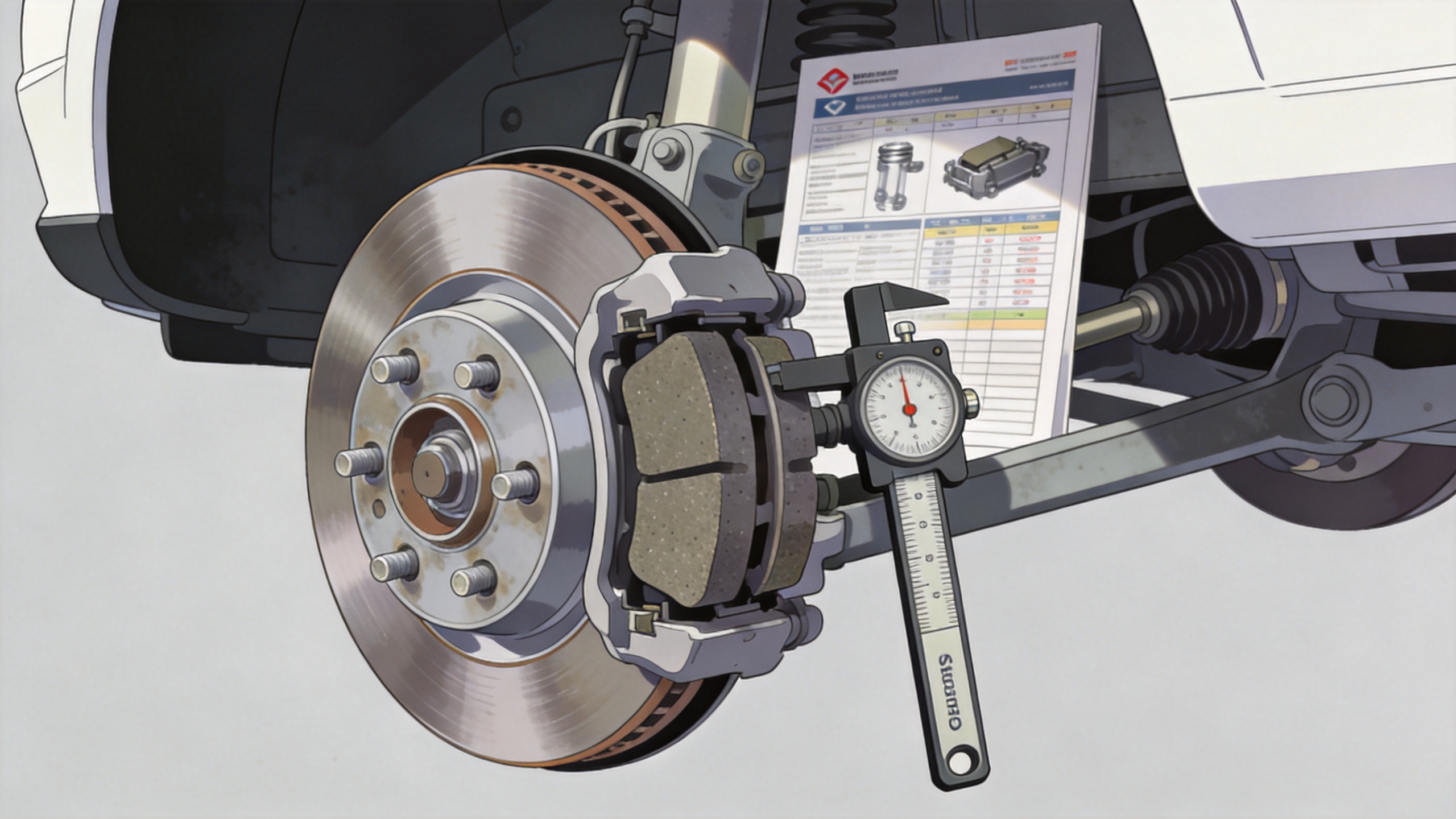
The key distinction is important: a squeal can be a useful reason to inspect, but it is not proof that every noise comes from worn pads. Likewise, a mileage estimate can help schedule checks, but it should not replace condition verification. This approach gives parts teams a more reliable basis for preparing rear brake pads without overstocking every reference.
Why rear-axle identification changes the inventory decision
Rear brake pads are not merely front pads with a different label. Pad outline, backing-plate geometry, hardware, sensor provision, and vehicle application can differ by axle and by trim. Before releasing a replenishment order, planners should confirm the vehicle make, model, year, engine or brake-system variant where relevant, axle position, and OE or cross-reference number.
Rear service can add another constraint: vehicles with electronic parking brakes may require a service-mode procedure and compatible hardware. That is a workshop-process issue, but it also affects stock planning. A shipment of otherwise plausible pads will not solve a same-day repair if the application, sensor configuration, or supplied accessory set is wrong.
A workable planning rule is to divide demand into three groups: fast-moving rear-axle references with stable fitment, scheduled replenishment items supported by maintenance history, and long-tail applications ordered only after confirmation. The result is a more useful forecast than pooling all rear brake pads into a single demand line.
Build a replacement trigger into the parts workflow
Rather than waiting for an urgent request, connect inspection findings to a short, repeatable workflow. When a shop or customer reports a warning sign, the planner should capture the application details and decide whether to reserve, reorder, or investigate first.
- Record the condition: note pad thickness, noise, warning light, uneven wear, rotor condition, and any parking-brake concern.
- Verify the rear application: use the catalog reference and axle position; do not substitute a front-axle reference based on appearance.
- Review related parts: uneven wear or rotor damage may mean pads alone are not the complete service decision.
- Check local availability: reserve the confirmed rear-pad SKU for the job, then compare the remaining balance with reorder thresholds.
- Feed the outcome back into demand data: record confirmed replacements separately from quotations or unverified noise complaints.
This workflow is particularly useful for distributors supporting multiple workshops. It turns rear brake pads replacement into a traceable demand signal and makes it easier to separate genuine service consumption from speculative ordering.
Use brake noise and uneven wear as planning signals—with limits
Brake noise is relevant to the maintenance cluster, but it needs context. A wear indicator can create a sharp, consistent noise when pad material becomes low. Uneven pad wear may also appear alongside rotor irregularity, brake drag, or hardware concerns. For that reason, a planner should not use “noise reported” as a standalone automatic reorder code.
Instead, use a two-stage rule. First, flag the inquiry for rear-brake inspection. Second, after the technician confirms the application and condition, move the part to a reserved or replenishment state. This simple separation reduces false demand while giving high-probability replacements enough lead time.
It also helps purchasing teams plan complementary categories sensibly. If a confirmed inspection finds abnormal wear, the conversation may need to include rotors, hardware, or caliper-related checks. Those items should be evaluated against the actual diagnosis rather than bundled into every rear brake pads replacement order.
Set stocking thresholds around fitment confidence and service lead time
For brand owners and wholesalers, an appropriate rear-pad stock level is rarely the largest one. It is the level that protects common applications while keeping fitment risk visible. Start with completed rear-axle replacement history by reference, then account for supplier lead time, seasonal workshop patterns, and the number of applications served by each SKU.
| Planning condition | Suggested parts action |
|---|---|
| Common rear-pad reference with confirmed recurring demand | Maintain a defined safety stock and review reorder points regularly. |
| Customer reports noise or a warning, but fitment is unconfirmed | Open an inspection-linked inquiry; do not commit stock until the rear application is verified. |
| Confirmed rear-pad wear with abnormal rotor or hardware findings | Reserve the pad set and prepare a related-parts review based on the technician’s diagnosis. |
| Rare application or unclear vehicle variant | Verify OE/cross-reference details before procurement or allocation. |
For example, a distributor can review a confirmed product page such as ceramic brake pads for selected Hyundai, Kia, and Nissan applications after checking the exact vehicle application and axle fitment. The listing supports a sourcing conversation; it does not replace catalog verification.
Make rear brake pads replacement part of routine maintenance planning
The most reliable time to plan rear brake pads replacement is when inspection evidence, vehicle identification, and inventory data meet in the same workflow. Regular rear-axle checks, documented noise or warning signals, and separate rear-SKU demand history give purchasing teams a clearer view of what to carry and when to replenish.
For brake-pad brands, wholesalers, and large distributors, the goal is not to predict every replacement perfectly. It is to respond to confirmed maintenance signals with the correct rear-axle part, realistic lead-time control, and a disciplined fitment check. That makes the supply plan more useful for workshops—and safer than treating every brake-noise inquiry as the same job.
Frequently asked questions
Should rear brake pads be planned separately from front brake pads?
Yes. Rear and front pads can differ in shape, application coverage, hardware, and service requirements. Keep rear-axle fitment and demand records distinct whenever possible.
Does a squealing brake necessarily mean rear brake pads replacement is needed?
No. A squeal may be a wear-indicator signal, but it can also have other causes. Use it as a prompt for inspection and application verification.
What information should a buyer collect before ordering rear brake pads?
Collect the confirmed rear-axle position, vehicle application details, OE or cross-reference number where available, brake-system variant, sensor or hardware requirements, and the inspection finding that prompted the order.